The furniture and interior decoration market is no longer just a matter of palette or style. Regulatory constraints, the rise of reuse, and new European sustainability requirements are reshaping the way we design interiors. Enhancing your decor now involves both technical and aesthetic choices.
ESPR Regulation and REP Sector: What Changes for Decorative Furniture
The European regulation ESPR (regulation (EU) 2024/1781), which came into effect on July 18, 2024, gradually imposes sustainability, reparability, and traceability requirements on several product categories. Furniture is among the priority sectors.
At the same time, the French specifications for the REP sector of furniture elements, applicable for the period 2024-2029, set ambitious goals. Ecomaison aims to manage 120,000 tons of furniture elements intended for reuse or recycling by 2030.
For consumers, this translates into an evolving offer. Manufacturers are integrating more recycled materials, offering disassemblable and repairable pieces. Choosing a piece of furniture or a decorative object while considering its actual lifespan and end-of-life pathway is no longer an activist gesture; it is a necessary perspective.
The AGEC law and decree n° 2021-254, amended in 2024, also require public buyers to include a minimum share of goods from reuse or incorporating recycled materials. This dynamic flows into the residential market: decoration brands are enriching their ranges with refurbished or eco-designed references.
Sustainable Materials and Fabrics: Balancing Aesthetics and Traceability
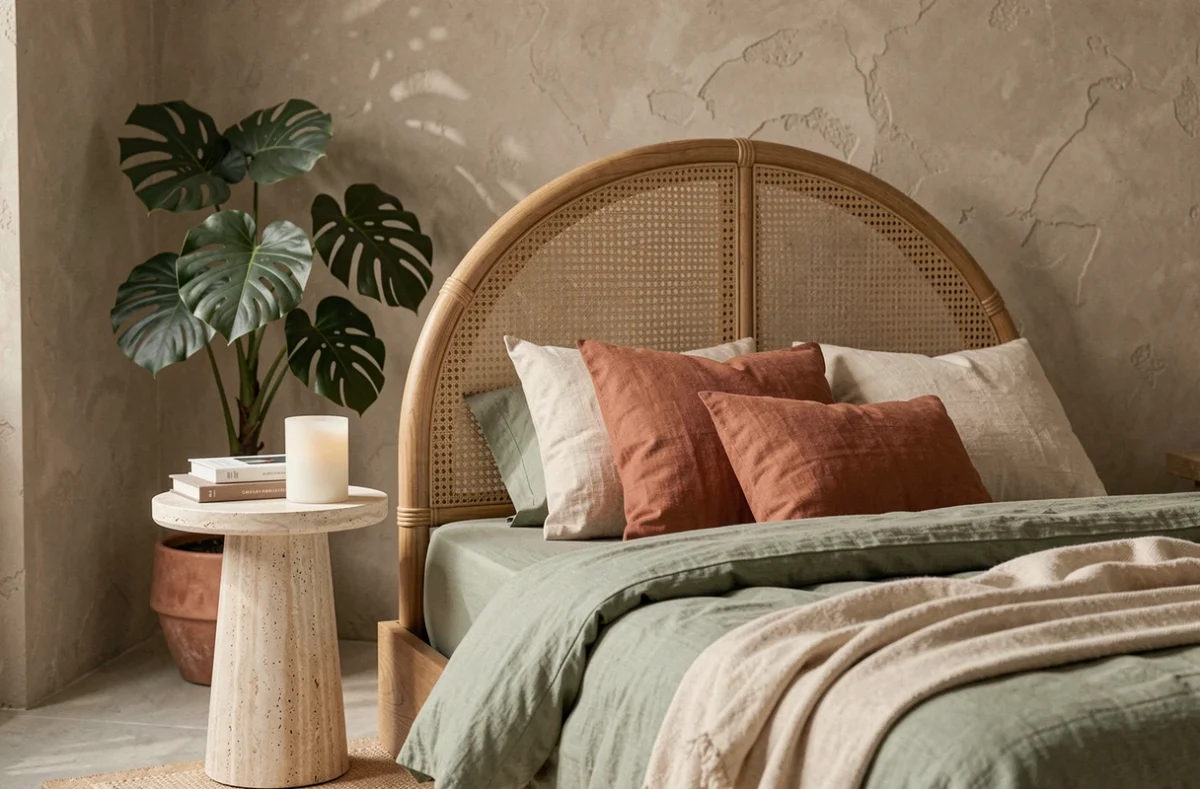
We are seeing that raw materials (linen, hemp, untreated wool) are gaining ground against synthetic fabrics in interior decoration collections. This is not just a visual trend. The traceability of fibers is becoming a purchasing criterion, driven by the requirements of the ESPR regulation.
A European linen upholstery fabric or a linen shade has a measurable environmental footprint. In contrast, recycled polyester may carry a label without the transformation chain being documented from start to finish. We recommend systematically checking the origin of the fiber and the weaving location before finalizing a textile choice for a living room or bedroom.
- Linen grown in Europe (France, Belgium, Netherlands) offers mechanical resistance suitable for covers, curtains, and cushions, with a documented short supply chain.
- Untreated looped wool, used in rugs or wall coverings, provides natural sound insulation and ages without visually degrading.
- Certified recycled cotton, with a sufficiently dense weight, is suitable for decorative textiles under heavy use (throws, tablecloths).
Exploring the decor universe of Incroyable Maison allows you to find textile pieces and accessories that meet these material criteria without sacrificing decorative intent.
Colors and Interior Style: Going Beyond the Annual Trend Cycle
The palettes announced each year by paint manufacturers and trade shows create a rapid fashion effect. Deep shades (burgundy, forest green, midnight blue) coexist with earthy tones and desaturated pastels. The real challenge is not to follow the color of the year, but to choose shades that withstand aging.
A mineral-based matte paint (lime, silicate) patinas better than a satin acrylic on a living room wall exposed to light. The finish evolves over time instead of yellowing. This is a technical parameter that consumer articles rarely mention.
For high-traffic areas (entryway, dining room), we recommend medium colors rather than pure whites or very dark shades. Stains and micro-scratches remain less visible, which extends the intervals between two refreshes.
Combining Wall Colors and Furniture Without a Catalog Effect
A terracotta wall works with light wood furniture as long as the wood’s undertone (pink, yellow, gray) is consistent with that of the paint. Testing a paint sample directly against the furniture, in natural light and artificial light, avoids unpleasant surprises.
Mixing new pieces with vintage or refurbished furniture brings a visual depth that an entirely new interior does not produce. Reuse becomes an aesthetic tool as well as a responsible choice.
Reuse and Refurbished Furniture: An Underestimated Decorative Lever
Refurbished furniture is no longer confined to flea markets. Structured channels now offer cleaned, repaired, and guaranteed furniture, with logistics comparable to new items. For a small business outfitting its premises or for an individual furnishing a living room, the quality-price ratio is often more favorable than that of entry-level new products.
The patina of a solid oak sideboard from the 1960s, the lines of a second-hand Scandinavian chair, or the texture of an antique kilim rug introduce singularities into the decor that are impossible to reproduce en masse. This controlled irregularity gives character to an interior.
- Check the structural condition (joints, legs, springs for seating) before purchase, as artisanal re-gluing can sometimes mask fragilities.
- Prefer solid wood or metal pieces, which are easily restored, over melamine panels whose coating cannot be repaired.
- Document the provenance if possible: a piece of furniture with an identifiable story (workshop, era, designer) gains decorative and heritage value.
Integrating Reused Pieces into a Contemporary Interior
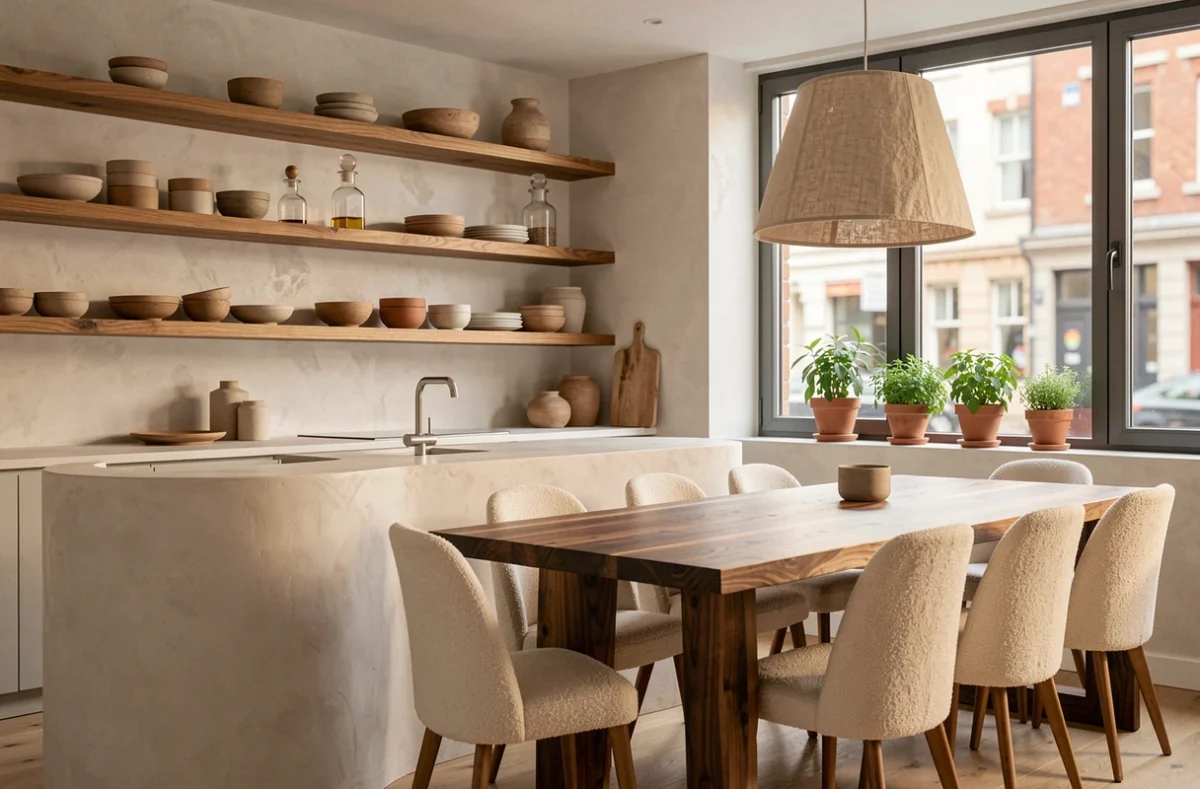
A common mistake is to create a “vintage” corner isolated from the rest of the room. Dispersing antique pieces among contemporary furniture creates a more natural effect. An Art Deco dresser between two sleek shelves, an industrial light fixture above a ceramic table: the contrast works when each object retains space around it.
Interior decoration gains coherence when it integrates these technical and regulatory constraints from the selection phase of furniture, materials, and colors. An interior designed to last does not age; it evolves.