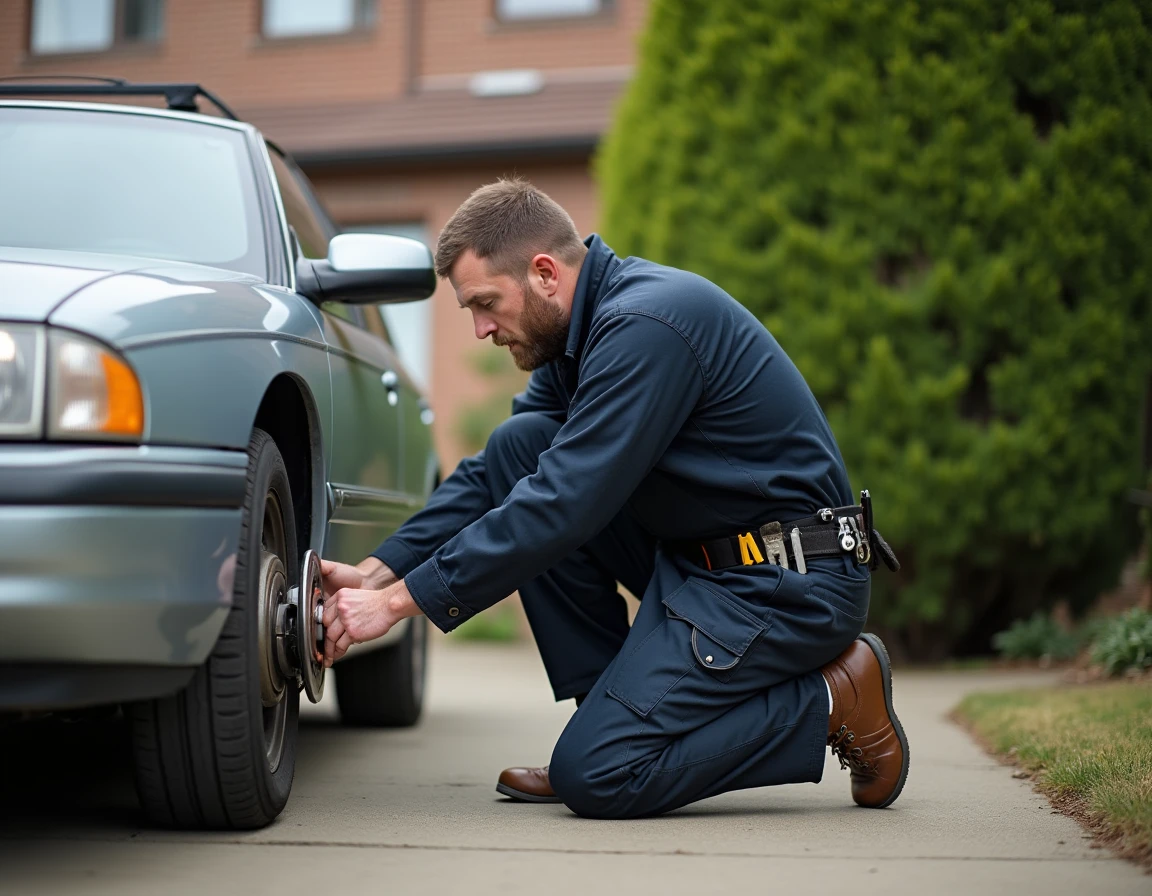
The home mechanic market has been structured in France in recent years, driven by the demand for automotive services without the need to go to a garage. Behind the promise of convenience, the mobile mechanic remains subject to a strict regulatory framework, identical to that of a fixed workshop. Understanding this framework, the services that can actually be performed outside of a garage, and the technical limitations of the format allows for an informed choice before entrusting one’s vehicle to a mobile professional.
Qualification and civil liability: what the law requires of the mobile mechanic

Since the ordinance of March 30, 2016, home automotive repair activities are subject to the same obligations as fixed garages. Registration with the RCS, professional qualification (CAP, BEP or equivalent), professional civil liability: nothing legally distinguishes a mobile mechanic from a traditional workshop.
Price display and the provision of a repair order before intervention are monitored by the DGCCRF, whether the professional works in a parking lot or in front of your home. Commercial pages rarely mention these constraints, even though they condition the very legality of the service.
Before validating a quote, checking the SIRET number, the declared qualification, and the existence of professional liability insurance remains the first precaution. A service like mecamobile.fr allows for the centralization of connections with identified professionals, but the verification of documents is always the client’s responsibility.
Home automotive diagnostics: what works and what doesn’t
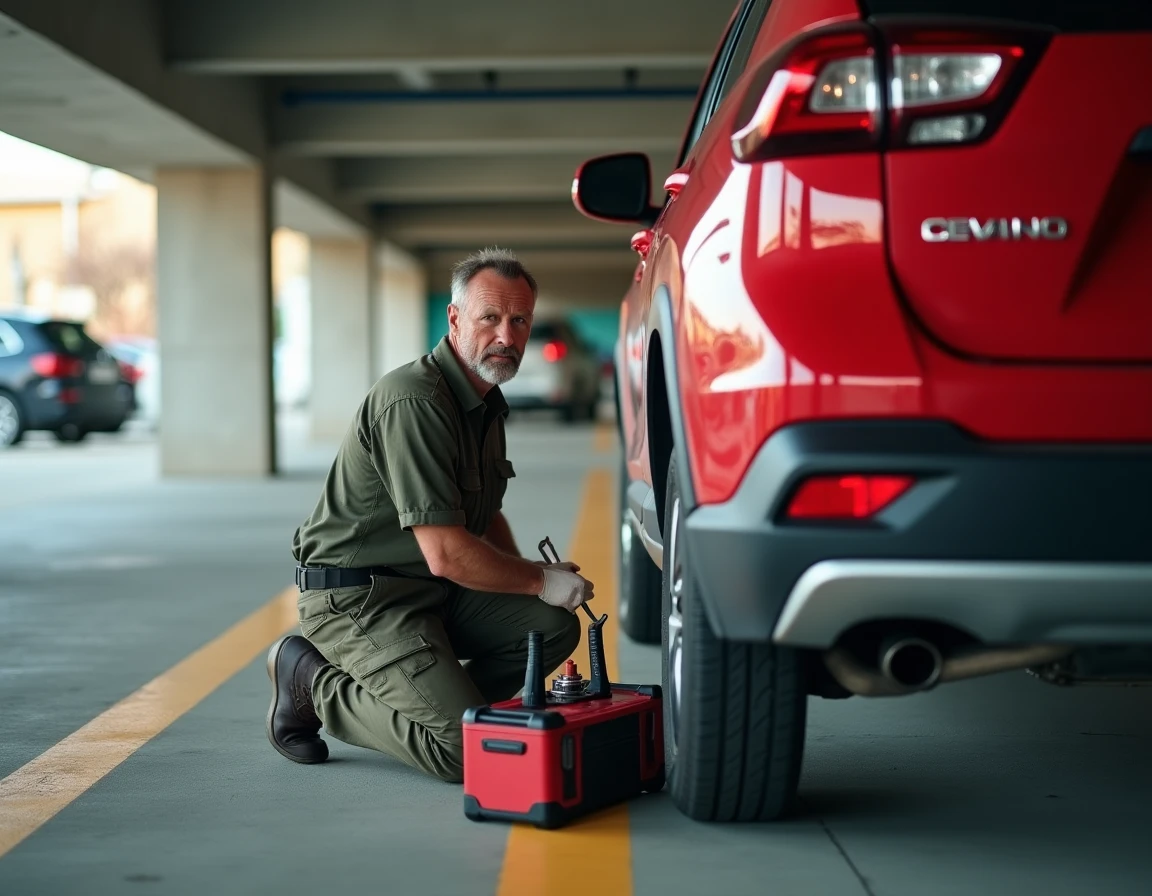
Electronic diagnostics is one of the most requested services in mobile interventions. Connecting a diagnostic tool to the vehicle’s OBD port to read fault codes is technically feasible anywhere, without any particular infrastructure.
However, access to data from connected vehicles remains a major obstacle. The generalization of embedded systems increases dependence on manufacturers for software updates and certain calibrations. An independent mechanic, even if qualified, may find themselves blocked by a locked ECU that requires access to the manufacturer’s server.
The European regulation on vehicle data (under discussion) could change this situation, but at this stage, field feedback varies on the actual capacity of independents to handle complex electronic failures. For recent models from certain brands, visiting a dealership remains sometimes the only option for reprogramming.
Routine maintenance services that can be performed at home
Classic mechanical interventions adapt well to the mobile format, provided that the professional has the appropriate tools and a properly equipped workshop vehicle.
- Engine oil change and oil filter replacement, operations that can be performed on flat ground with an approved recovery tank for used oils
- Replacement of brake pads and discs, provided that a stable hydraulic jack and the necessary space around the vehicle are available
- Battery, spark plug, and filter (air, cabin, fuel) changes, quick interventions that do not require a lift or pit
- OBD diagnostics and clearing of fault codes, with the mentioned limitations for recent connected vehicles
Heavy operations (clutch, timing belt, bodywork) remain outside the realistic scope of a home intervention. The weight of the tools, safety constraints, and intervention time make these services unsuitable for the mobile format.
Reused parts: a legal obligation that the mobile garage must also respect
The decree of May 30, 2022, requires all repair professionals, including mobile garages, to offer reused or remanufactured parts whenever possible. This offer must be included in the quote and invoice, with a written record of the client’s choice.
For a mobile mechanic, this obligation adds a logistical constraint. Unlike a fixed workshop that can stock a catalog of used parts, the mobile professional must anticipate supply before each intervention. In practice, this sometimes extends the time between the quote request and the execution of the service.
The environmental and cost arguments favor reused parts. Replacing brake pads with remanufactured parts can significantly reduce the total cost of the intervention. The client should explicitly request this option when making an appointment so that the mechanic can organize in advance.
Comparing the price of a mobile intervention and a traditional garage
The question of pricing comes up consistently. The hourly rate of a mobile mechanic is generally lower than that of a dealership, but direct comparison remains tricky. A fixed garage amortizes its heavy equipment (lift, compressor, specialized tools) over a high volume of interventions, which can lower the unit price of certain complex operations.
The mobile mechanic, on the other hand, does not have workshop rent but incurs travel expenses and uncharged travel time (or included in the package). For routine maintenance (oil change, brakes, minor mechanics), the all-inclusive rate is often competitive. For an intervention requiring several hours and heavy tools, the traditional garage regains the advantage.
What the quote must mention
Regardless of the format, a quote from an automotive professional must detail the price of parts, the cost of labor, the estimated duration, and the mention of the offer of reused parts. An incomplete or verbal quote has no contractual value and exposes the client in case of dispute.
Requesting a written quote before any intervention, even for a simple service, remains the basic reflex. Connection platforms facilitate this step by standardizing the format, but the content of the document is the professional’s responsibility.
Practical limits of home automotive maintenance
Home intervention assumes an appropriate workspace. A vehicle parked in an underground parking lot with limited ceiling height, or parked on a slope, can make the intervention impossible or dangerous.
The management of waste (used oils, brake fluid, replaced parts) is the responsibility of the professional, who must have compliant containers and ensure their treatment through an approved channel. This point distinguishes the serious professional from the informal operator.
Weather conditions also constitute an underestimated variable. Working in the rain on a braking system or an electrical circuit raises safety and quality questions that each professional manages differently, without a specific standard governing this point.
The mobile format effectively covers routine maintenance and diagnostics for the majority of vehicles on the road. For recent models with high electronic integration, or for heavy interventions, visiting an equipped workshop often remains the most reliable solution. The choice primarily depends on the nature of the operation and the transparency of the professional regarding their own intervention limits.