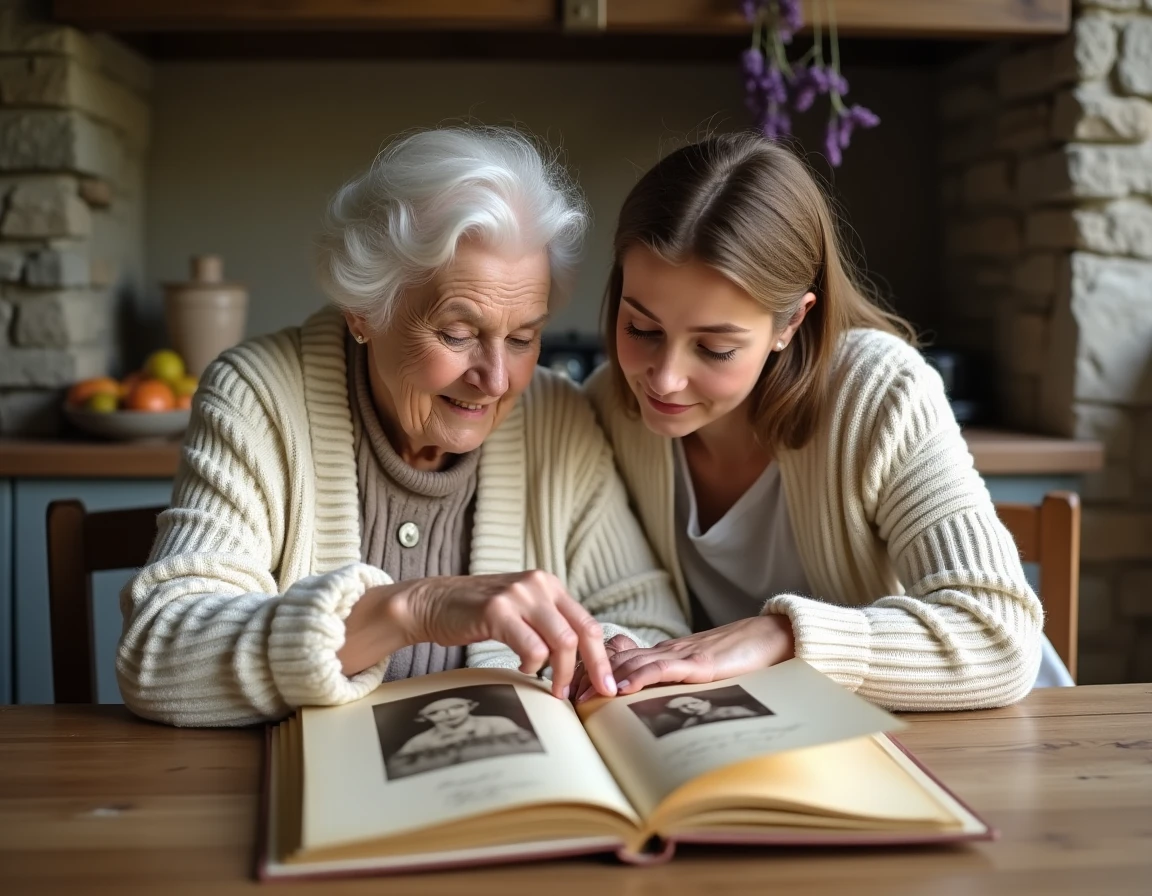
The transmission of family heritage is becoming an increasing concern for the French, but most available content focuses on financial and tax aspects. Archives, objects, oral stories, and photographs constitute a significant part of this heritage. Their preservation raises concrete questions that neither a notary nor a wealth management advisor typically addresses.
Family Archives and Legal Status: What the January 2024 Law Changes
The French law of January 24, 2024, regarding the protection of cultural property in the event of inheritance, has opened an unknown possibility: classifying certain objects or family archives as cultural property. This classification offers enhanced protection against dispersion during an inheritance and may provide access to specific tax provisions.
This point remains largely ignored by families who hold old correspondence, photographic collections, or historically valuable objects. The distinction between an ordinary movable property and a protected cultural property changes how these items are treated in inheritance sharing.
Families that possess old documentary collections (letters, notebooks, personal journals) benefit from approaching the departmental archives in their area. The departmental archive services, such as those in Yvelines in their 2023 activity report, report a significant increase in donations and deposits of family archives, often motivated by the fear of losing the memory of the last holder.
A documented process on cultivonsnosracines.fr helps identify the appropriate steps for each type of document or object.
Digitization of Memory Heritage: Current Practices and Limits
The barometer “The French and Family Memory” published by Ifop for MyHeritage in October 2023 highlights a clear increase in the digitization practices of family archives: photos, letters, notebooks. The use of collaborative tools to document family history is also growing in parallel.
Scanning a photo album or transcribing correspondence is not enough to ensure the longevity of this data. Several questions remain open:
- The chosen file format (JPEG, TIFF, PDF/A) determines long-term readability, and recommendations vary according to the consulted heritage institutions
- Storing on a personal hard drive exposes the risk of material loss, while cloud storage raises questions of privacy and dependency on a provider
- Metadata (date, location, identified people) is rarely recorded at the time of digitization, significantly reducing the documentary value of the file for future generations
The available data does not allow for a precise conclusion on the adoption rate of these best practices within French families. Field feedback varies on this point: some families digitize massively without structuring, while others prefer to entrust their collections to departmental archives.
Oral Transmission and Family Stories: A Heritage Without Material Support
Objects and documents are only part of family memory. Stories passed down orally (anecdotes, migration paths, artisanal know-how) disappear permanently upon the death of their holder if no one has recorded them.
Recording an interview with an elderly relative does not require expensive equipment. A phone and a quiet place are sufficient. However, the interview method radically changes the quality of the obtained narrative. Asking open-ended questions about specific periods produces usable testimonies. Asking “tell me your life story” often results in a superficial summary.
Some guidelines for structuring a collection of oral memory:
- Prepare a rough timeline of the interviewee’s life before the interview, based on existing documents (family booklet, dated photos)
- Prefer short sessions (less than an hour) over several days rather than a marathon interview that exhausts the witness
- Quickly transcribe key passages after recording, as the context is easily forgotten
- Identify proper names, places, and dates mentioned to allow for later cross-referencing with other family or institutional sources
Institutional Deposit or Private Conservation: Deciding Based on the Nature of the Documents
Entrusting family archives to a public service (departmental, municipal archives) guarantees professional conservation conditions: controlled temperature and humidity, appropriate packaging, standardized inventory. The deposit may be subject to conditions of accessibility, which helps protect the privacy of the individuals mentioned.
However, institutional deposit implies physically relinquishing the documents. For some families, this material separation is difficult to accept, even when the originals are deteriorating due to inadequate storage conditions at home.
Private conservation remains relevant for ordinary documents (recent family photos, administrative papers from the last two generations). It requires a minimum of precautions: storage away from direct light, moisture, and temperature fluctuations. Acid-free cardboard boxes, used by conservation professionals, are available for a few euros in specialized stores.
The choice between deposit and private conservation depends on the historical value of the documents, their fragility, and the family’s ability to maintain acceptable storage conditions over several decades. A family inventory shared among heirs remains a prerequisite, regardless of the chosen conservation method. Without a precise list of what exists and its location, the risk of loss or dispersion during a move or death remains high.