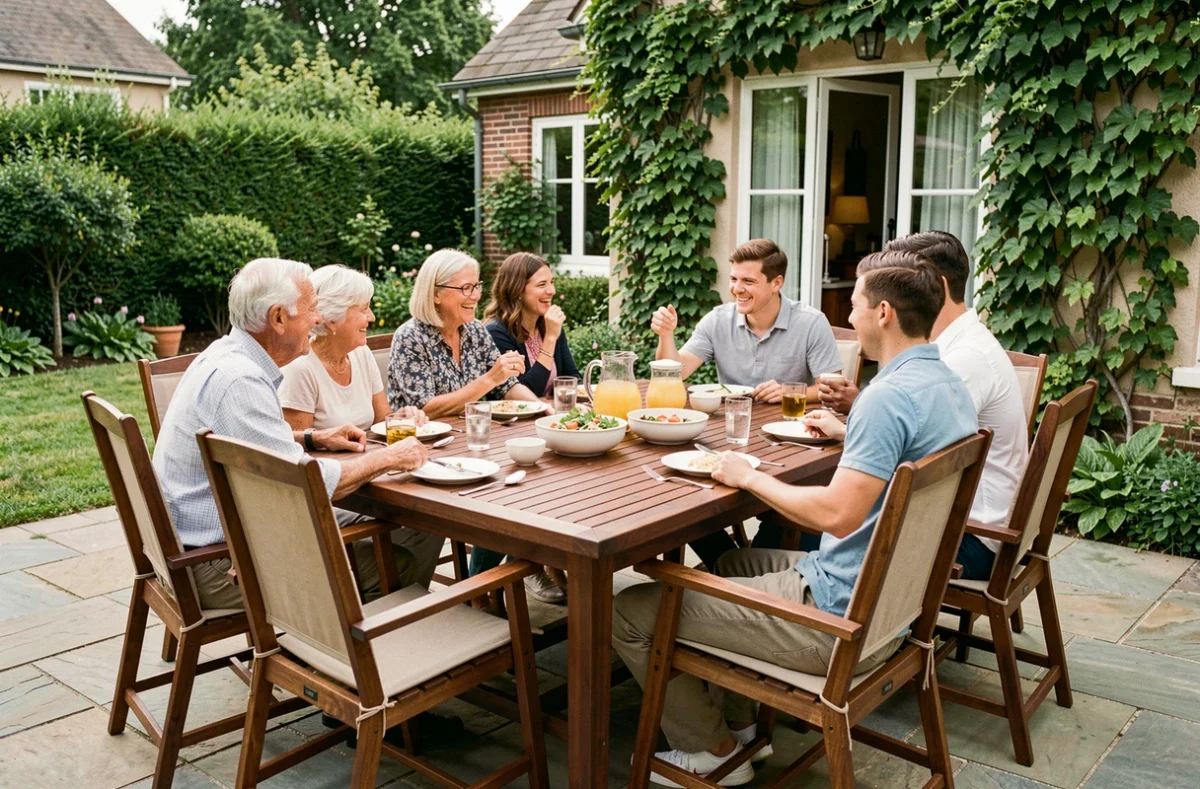
When there are six, eight, or ten at the table every Sunday, choosing a garden table is not just a matter of style. The surface area of the tabletop, the sturdiness of the frame, and the legroom under the table determine the actual comfort of the meal. At Brico Dépôt, the catalog offers several sizes suitable for large families, but not all meet the same space and usage constraints.
Height under the tabletop and table legs: what the dimensions don’t tell you
Product sheets indicate the length and width of the tabletop. They rarely mention the free height under the table or the position of the legs. For a large family, these two parameters make all the difference.
A central or X-shaped leg provides more freedom for placing chairs. Children at the ends of the table won’t bump into each other, and it’s easier to slide a high chair between two seats. In contrast, four corner legs force you to wedge the seats between the supports, which reduces the actual capacity.
Before buying, it’s better to choose a Brico Dépôt garden table by checking the leg configuration and height under the tabletop, not just the advertised dimensions. The actual capacity depends on the legroom, not the number of seats listed on the label.
Extendable aluminum table: the right compromise for families with varying numbers
Do you host the in-laws every other weekend and the whole sibling crew during holidays? A fixed table for ten takes up space all the time for meals that sometimes only gather four people.
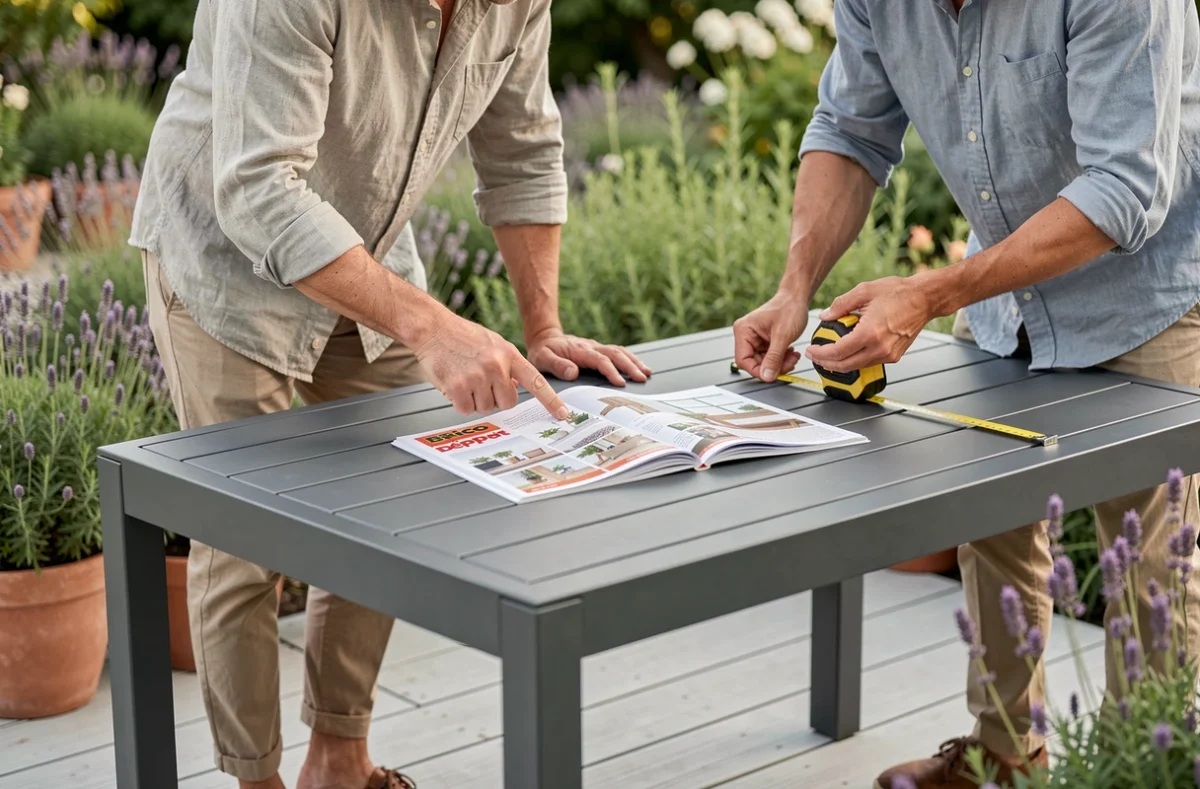
An extendable table avoids sacrificing the terrace on a daily basis. The Brico Dépôt catalog includes extendable aluminum models with glass tops. The extension mechanism deserves a check in-store: some extensions store under the tabletop, while others require separate storage space.
Two points to test before purchase
- The ease of handling the extension: one person should be able to open and close it without straining, especially if they repeat the operation every week.
- The stability once deployed: the extended tabletop should not sag in the center when placing a heavy dish. Press firmly in the middle to check.
- The storage of extensions: if they don’t fit under the table, plan for space in a nearby garden shed or garage.
Aluminum has a clear advantage for families: it doesn’t rust and can be cleaned with a quick wipe. After a birthday party with eight children, this ease of maintenance is no small detail.
Wind stability: an underestimated criterion for exposed terraces
The lightness of aluminum has a downside. On an open terrace or a garden without hedges, a lightweight table can tip or slide due to the wind. This problem is especially pronounced for models with glass tops, which have a high center of gravity.
The weight of the table must correspond to the exposure of the terrain. If your terrace is elevated or facing prevailing winds, a table made of woven resin on a steel frame or a solid wood model offers better ground stability.
At Brico Dépôt, comparing available materials helps make a decision:
- Aluminum is suitable for sheltered spaces or enclosed gardens. It moves easily to free up the terrace.
- Steel adds extra weight and good rigidity, but requires rust treatment or protective paint.
- Wood (acacia, eucalyptus) combines natural stability and durability, provided you apply oil or a saturator each year.
- Woven resin on a metal frame withstands the elements without special maintenance, with an intermediate weight.
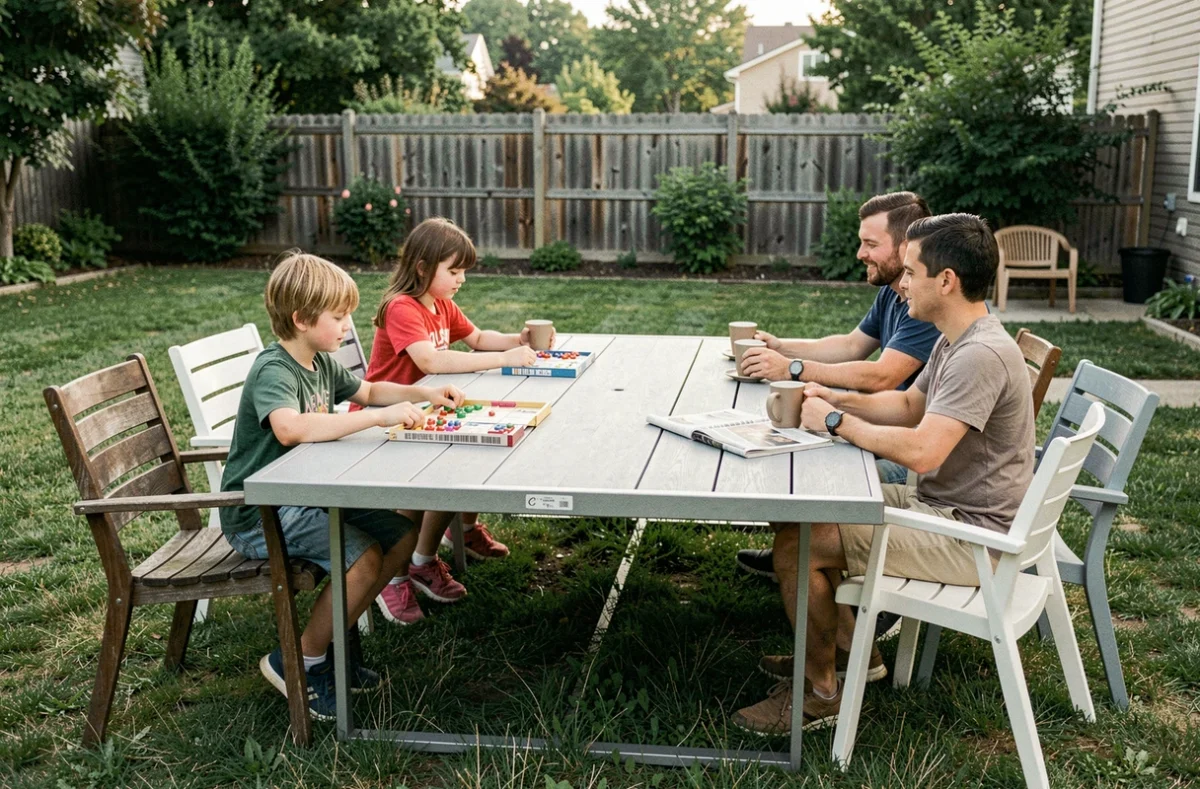
Table shape and circulation around it: rectangular, oval, or square
For a large family, the rectangular shape remains the most common. It allows for aligning seats and easily adding a guest at the end of the table. With a tabletop of at least two meters long, you can comfortably seat eight people.
The oval shape offers an often-overlooked advantage: the absence of corners facilitates circulation around the table. Children getting up frequently can pass without bumping into chairs. On a narrow terrace, the oval gains a few precious centimeters compared to the rectangle.
The square table works for four to six people. Beyond that, it becomes too deep: dishes placed in the center are out of reach for guests at the ends of the row. For a large family, this format is only relevant if you have two square tables placed end to end.
Adapting the shape to the available space
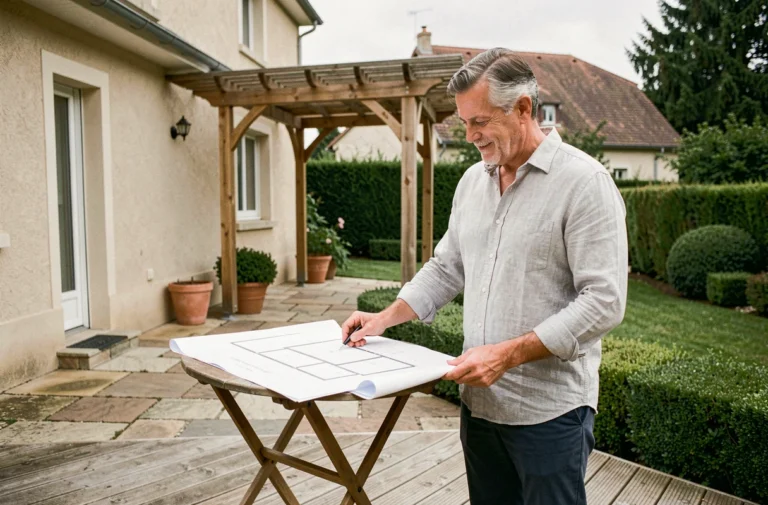
Allow at least one meter of clearance around the table to pull back the chairs. On a three-meter wide terrace, a rectangular table one meter deep leaves just enough passage. Measure the terrace before measuring the table.
In reality, choosing garden furniture for a large family relies on three concrete trade-offs: the actual space under the tabletop, wind resistance based on exposure, and the shape suited for circulation. The Brico Dépôt catalogs allow filtering by material and number of seats, but it’s in-store, testing the stability and extension mechanism, that the right model stands out from the wrong one.