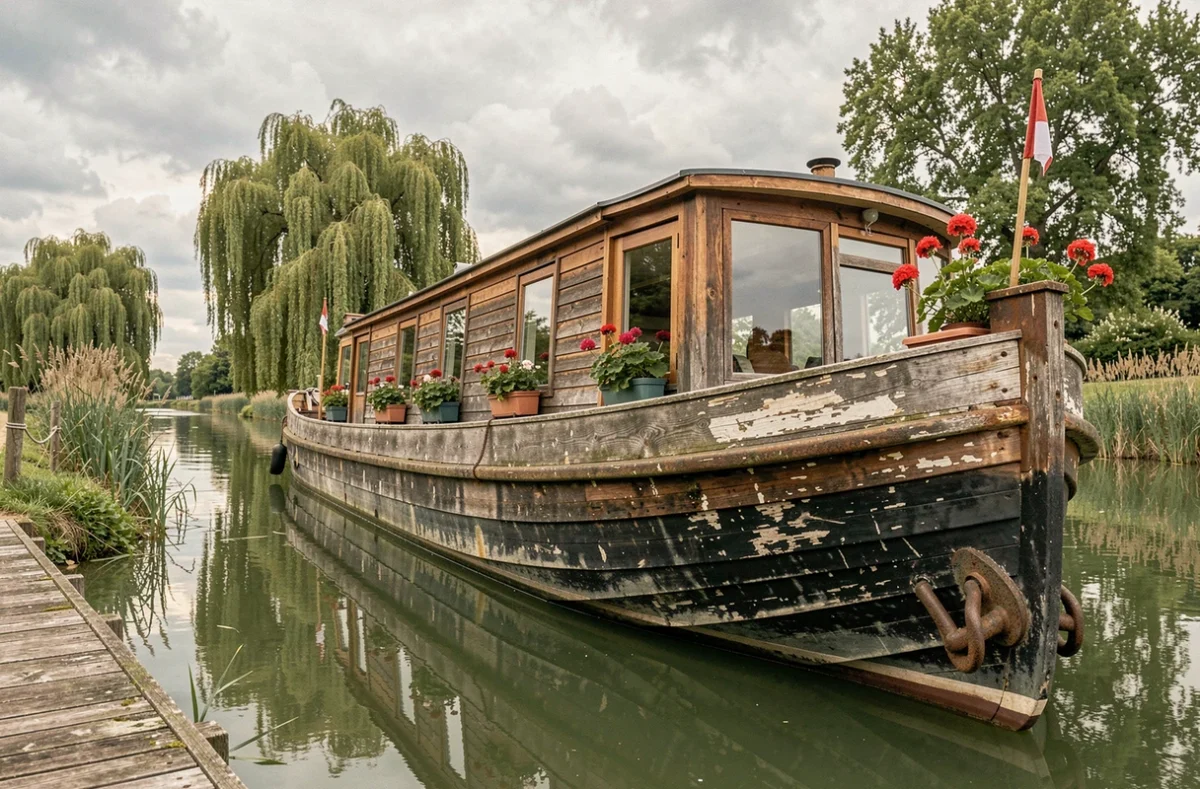
On the Canal du Midi or in a Loire river port, people book a night in a floating home for a change of scenery. But once on board, the question that makes all the difference isn’t the view from the terrace: it’s where the wastewater goes, how the heating works, and what happens if a child falls into the water.
Before confirming a floating-home stay, it’s worth looking below the waterline.
Wastewater and sanitation on board a floating home
Most land-based accommodation is connected to the public sewer system. On the water, there’s nothing comparable. Depending on the location and type of structure, greywater (from showers and washing dishes) and blackwater (from toilets) follow very different routes.
Some floating homes moored in equipped ports have a direct connection to the quay’s sewer system. Others, in more remote locations, store wastewater in a holding tank that must be emptied at a pump-out station.
One French company is also preparing a commercial rollout, planned for 2027, of a phytoremediation solution for houseboats, following a trial in Port-Marly and prototype development with the Lyon Metropolitan Area and Voies navigables de France. This kind of innovation shows that wastewater management remains an open technical challenge.
Before booking, you can ask the owner three straightforward questions: what wastewater treatment or storage system is installed, how often the tank is emptied, and whether there’s a service point nearby. If the host can’t give clear answers, it’s worth moving on to another property. Choosing a waterside home while traveling means checking these practical details just as carefully as the comfort of the bed.

Safety on board: what to check before you set off
Wooden interiors, string lights and sunset photos in the listing say nothing about safety. A stay in a floating home with children—or simply in winter, when the deck is slippery—calls for equipment you can check for yourself.
- Life jackets suitable for every age group, available on arrival and not locked away in a storage compartment deep in the hold.
- Guardrails or lifelines around the entire deck, high enough to prevent accidental falls.
- A checked fire extinguisher and working smoke detector, especially if the heating relies on a wood-burning stove or gas appliance.
- Written safety instructions posted on board, including the local emergency number, what to do in the event of a leak, and where to find the lifebuoy.
The absence of guardrails or readily accessible life jackets is reason enough to cancel. This isn’t about comfort but about a real risk of injury. Unusual accommodation doesn’t exempt the owner from their safety obligations, whether it’s a standard furnished tourist rental or a floating structure.
Accommodation status and local regulations
Regulations for furnished tourist rentals changed in 2026, notably with Decree No. 2026-196 of March 19, 2026. How they apply to a floating home depends on its legal status (habitable boat, floating structure, or premises open to the public) and the local rules at its mooring location.
In practice, accommodation moored in a port managed by Voies navigables de France is subject to different requirements from a floating cabin on a private body of water. Before booking, check whether the listing displays a furnished tourist rental registration number; this provides an initial indication of compliance. The accommodation’s legal status determines which rules apply.
Eco-friendly floating homes: separating marketing from reality
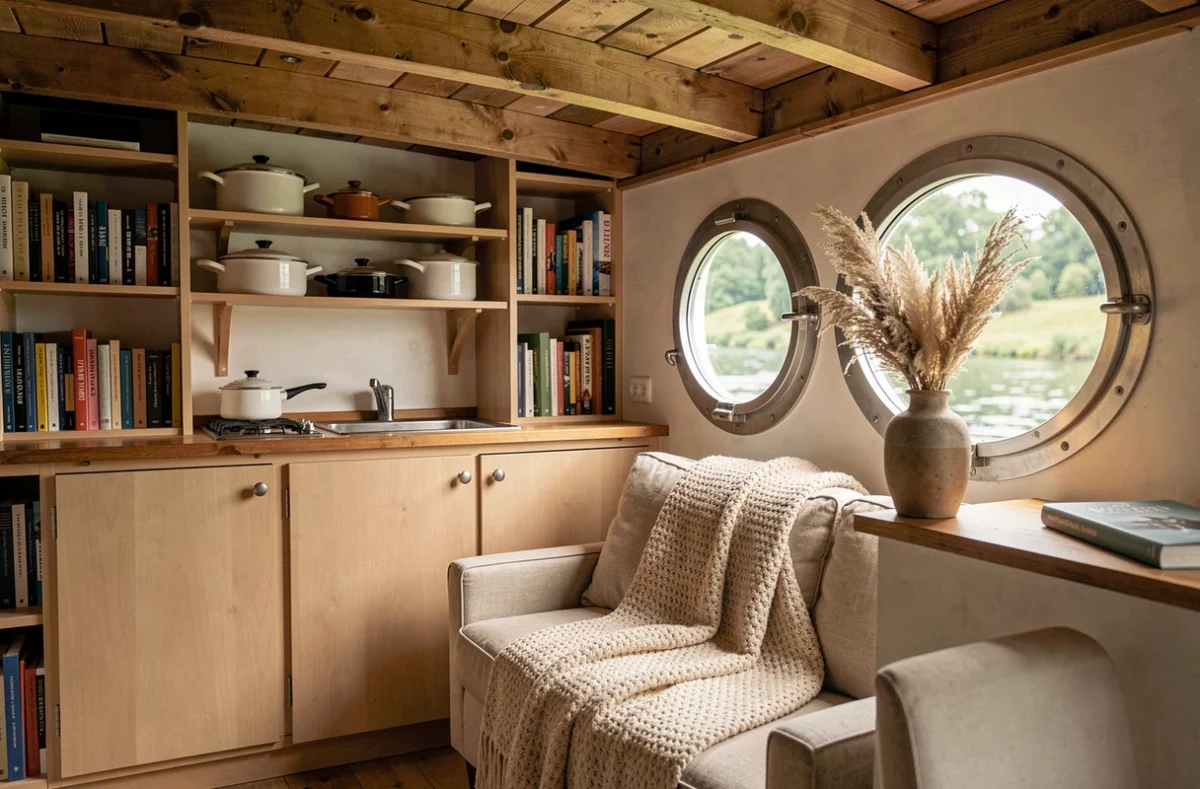
Many listings promote a “nature” or “eco-friendly” stay. Exposed wood and water lapping beneath the terrace are enough to create the illusion. But a property’s appearance says nothing about its actual environmental impact.
A genuinely low-impact stay depends on how the property is run and the infrastructure it uses, not on the decor. Here are some practical points to check:
- Energy source: solar panels, a connection to the quay’s electrical supply, or a diesel generator running at night.
- Waste management: organized recycling or just one general waste bin with no separate collection.
- Access route: a remote mooring without a pump-out station or collection point makes waste disposal much more difficult.
A diesel generator undermines the eco-friendly claim, no matter how beautiful the recycled wood cladding is. For a clearer picture, ask the owner for a technical specification sheet for the energy equipment rather than relying on self-awarded labels.
Equipped routes versus remote moorings
Canals and navigable waterways have equipped stopping points with electrical hookups, drinking water and pump-out stations. A stay along an established route (the Canal du Midi, the Burgundy Canal, or the Erdre near Nantes) offers a setting where sanitation logistics are taken into account.
A remote mooring on a private lake or a quiet river branch may be appealing for its peace and quiet, but wastewater and waste management then depend entirely on the owner. The quality of the stay comes down to how much they have invested in the infrastructure, which varies considerably from one site to another.
What to check before booking a floating home
The usual approach is to compare photos, prices and reviews. For floating accommodation, you need to add another layer of checks—one that booking platforms don’t always make easy.
Asking for a photo of the holding tank or the connection to the quay may seem excessive. But this level of detail can make the difference between a great stay and an unpleasant surprise. Asking technical questions before paying offers better protection than online reviews.
The type of toilet installed (composting, chemical or connected to the sewer) can radically change the day-to-day experience. It’s also worth clarifying whether there’s running hot water, the capacity of the freshwater tank and how long the electrical supply lasts before you arrive.
Staying in a floating home is a unique experience, as long as you treat it for what it is: a technical dwelling in an aquatic environment, with its own specific constraints. The charm of the water lapping against the hull is all the better once the practical questions have been settled.