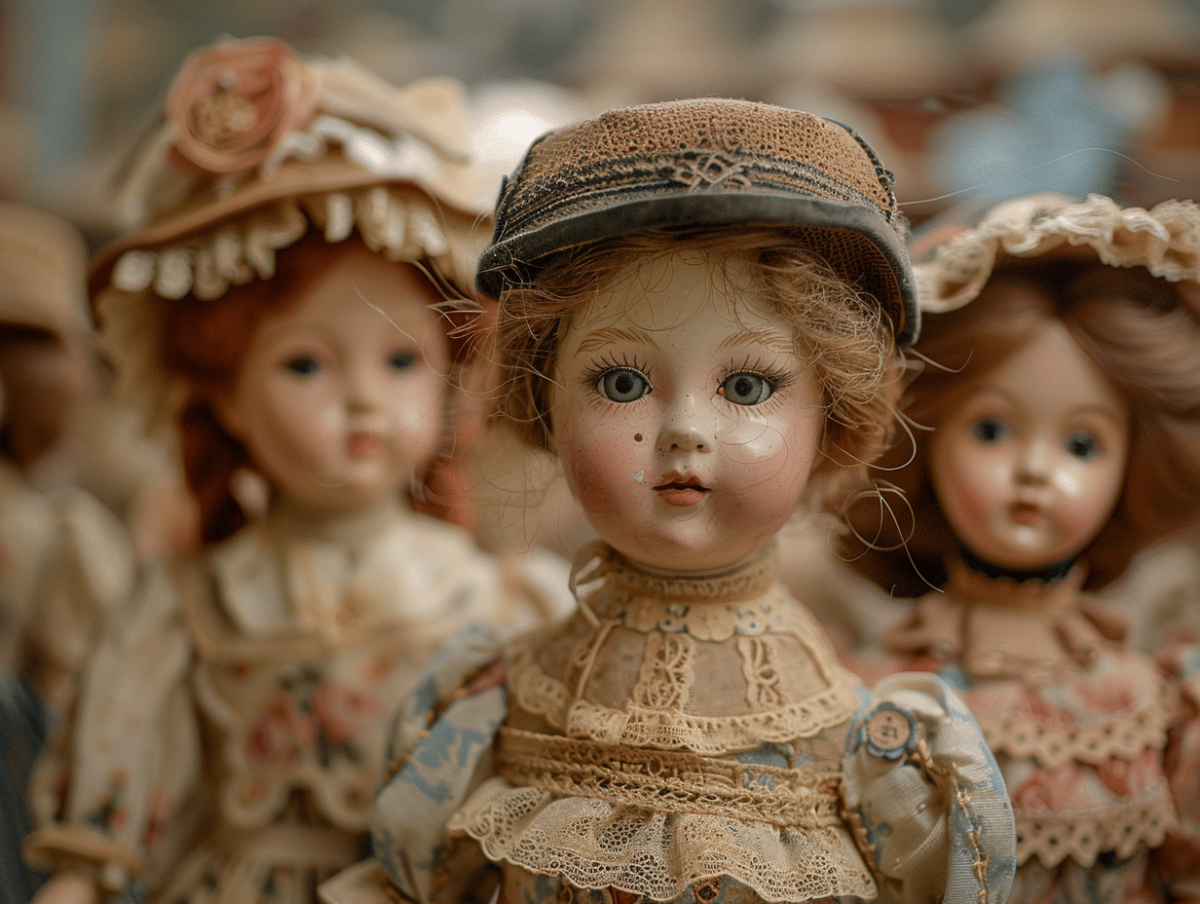
In the depths of collective memory, toys of yesteryear awaken a nostalgia tinged with mystery. Traditional dolls, in particular, embody a part of our cultural heritage: they were more than mere amusements for children. These objects, often handcrafted from modest materials, tell the stories of bygone eras, ways of life, and beliefs of the past. They also served as educational tools, collectible items, or protective talismans. Today, these dolls are open windows to the past, testifying to the ingenuity and creativity of artisans from earlier times.
The origins and evolution of traditional dolls
Trace the contours of the genesis of traditional dolls and you will discover a facet of toy history that is deeply rooted in culture. Take the example of kokeshi dolls, born from Japanese culture during the Edo period. These slender figures, originating from the island of Honshu, are the result of the meticulous work of wood artisans known as Kijiya. These creators, armed with a craft passed down through generations, brought to life two distinct types of kokeshi: traditional and creative. These objects, far more than just wooden toys, symbolized protection, prosperity, harmony, and contentment for the people of northern Japan.
In this evocation of the past, do not forget the Robert doll, another witness to the evolution of toys. This figure, perhaps more familiar in appearance, embodies a specific page of our playful history. Like the kokeshi, it reminds us that dolls were vectors of culture, education, and social refinement. They were designed to transcend ages, carrying with them the stories and hopes of the peoples who created them.
The survival of these artifacts through time is not a matter of chance. It is the result of perpetuation and incessant adaptation. Traditional dolls have managed to evolve, integrating new forms and materials while preserving the essence of their original heritage. Technical innovation and contemporary aesthetics have often married ancestral knowledge to renew interest and ensure the transmission of these unique toys.
The place of traditional dolls in contemporary culture and society
Consider the cultural impact of traditional dolls, collectible objects and symbols of a preserved cultural identity. Kokeshi dolls, for example, are no longer just toys: they embody the soul of a culture that spreads well beyond its original borders. Their influence extends to popular culture, art, and even the tourism sector, attracting visitors curious to discover these witnesses of Japanese history.
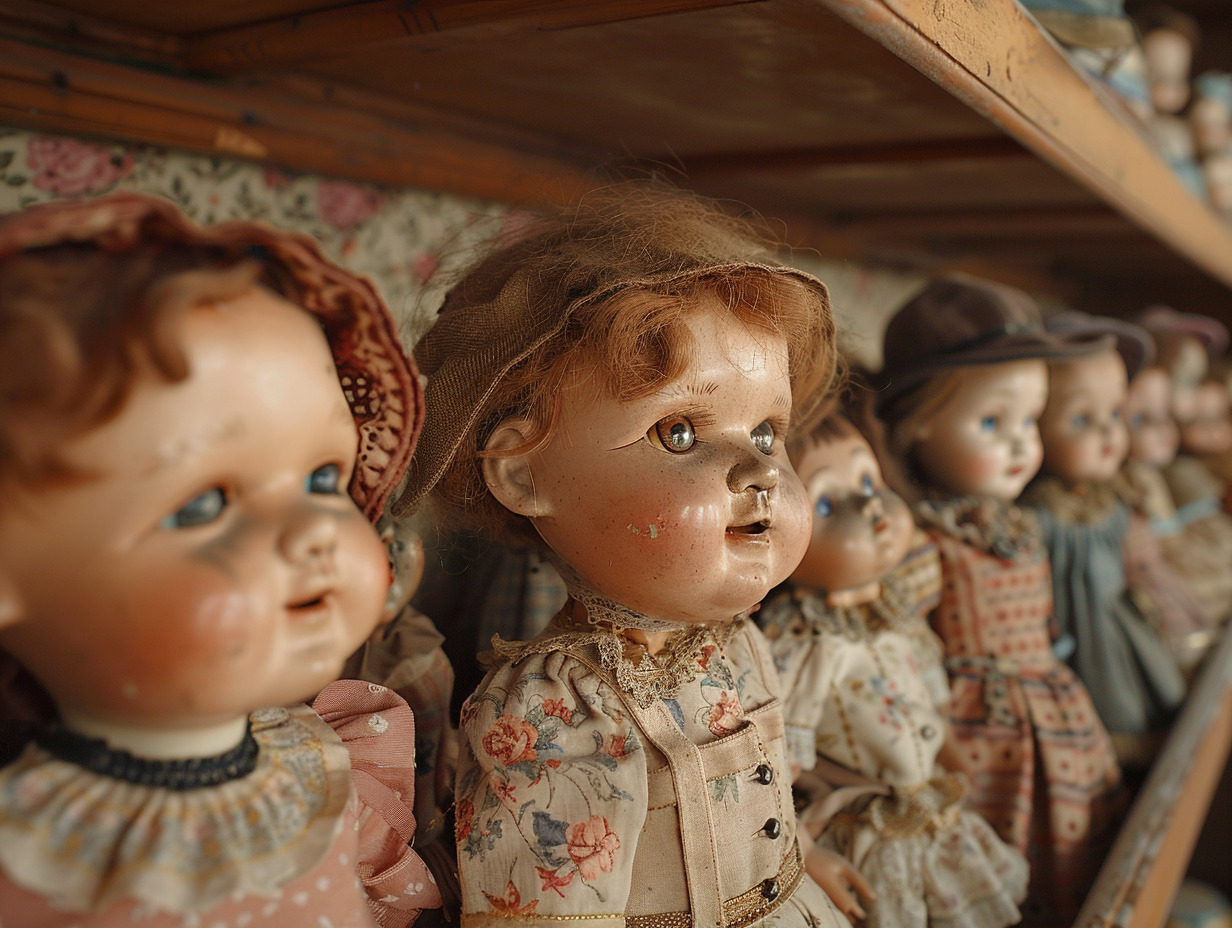
Collectors, passionate about the artistic, historical, and cultural value of these pieces, play a key role in the preservation of these treasures. Traditional dolls are now recognized as precious goods, testifying to the traditions and know-how of bygone eras. Their possession transcends the playful aspect to anchor itself in a desire for connection with the past and its teachings.
Innovation, far from opposing tradition, invites itself into the dialogue with the old. Today’s artisans, while respecting ancestral methods and patterns, breathe new life into these objects through modern designs and materials. The future of traditional dolls is thus shaped at the crossroads of innovation and preservation, ensuring their relevance in a constantly changing world.
Institutions like the toy museum in Colmar stand as guardians of this playful heritage. These exhibition and memory spaces allow current and future generations to immerse themselves in the world of traditional dolls and understand their place in the cultural continuum. The heritage of toys from the past continues to fascinate and educate, confirming its indispensable role in contemporary society.