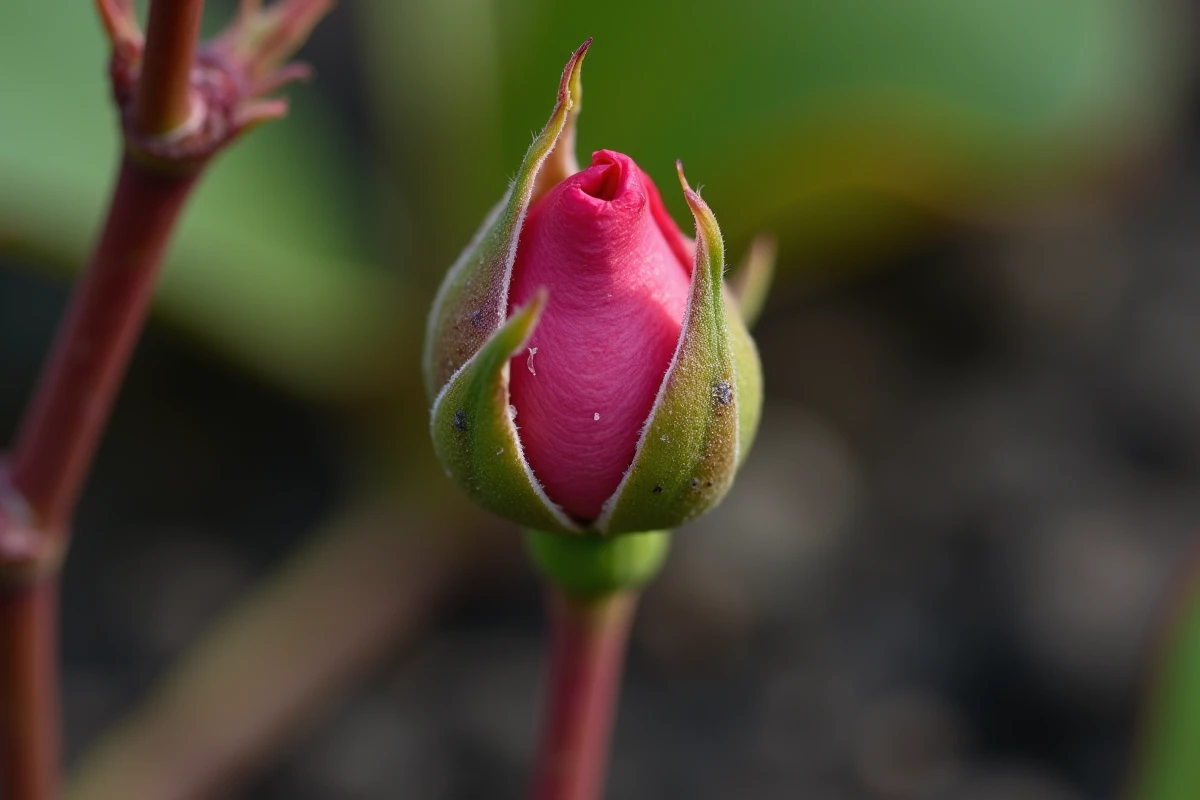
The rose eye refers to the axillary bud located at the axil of a leaf, on a lignified or semi-augmented stem. Its position on the branch, its orientation, and its dormancy state directly influence the future shape of the rose bush and the quality of its flowering.
Rose eye and supporting wood: the link between flowering type and preservation of old wood
On a non-repeating rose bush, most flowering eyes form on the wood from the previous year. Removing this old wood means eliminating the buds that would have produced roses. Conversely, repeating roses rely more on the eyes present on the current year’s shoots.
This distinction radically changes the pruning approach. An old non-repeating rose requires the preservation of a significant portion of two-year-old wood to maintain its flowering potential. Systematically cutting back to three eyes, as is often advised for hybrid teas, sacrifices the most productive buds.
We recommend identifying the type of flowering before any intervention. A non-repeating climbing rose pruned like a repeating bush can easily lose an entire season of flowering, without the gardener understanding the source of the problem. To better understand what a rose eye is on Instant Jardin, one must first think in terms of supporting wood rather than just counting buds.
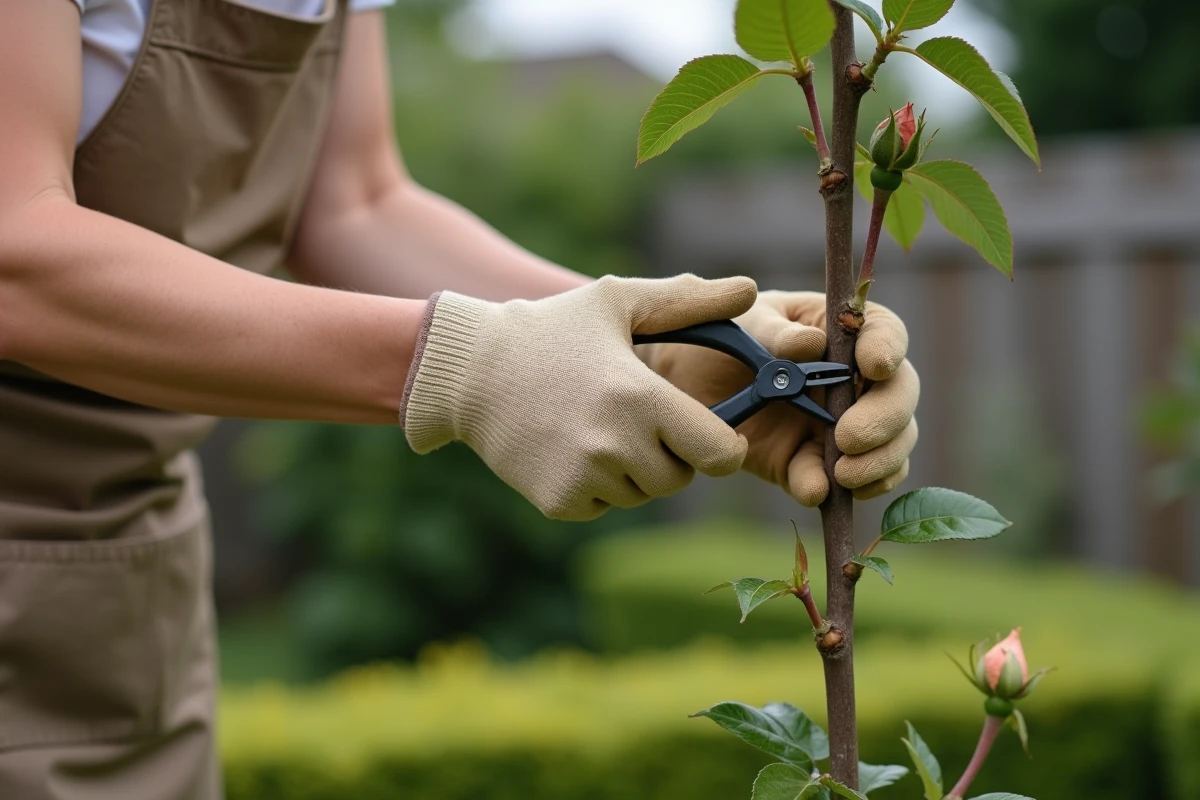
Activation of dormant eyes after water stress: an underestimated phenomenon
Heatwaves and prolonged droughts cause late budding of dormant eyes, sometimes in the middle of summer. The rose bush, deprived of water, enters forced dormancy and then resumes growth as soon as moisture returns. This off-schedule restart mobilizes the carbohydrate reserves of the collar and roots at a time when the plant should be storing them for winter.
This late awakening weakens the flowering of the following year. The new shoots from these dormant eyes do not have time to properly mature before the first cold spells. They freeze, and the rose bush starts again in spring with less viable wood.
On urban garden roses, where the soil dries out faster than in open ground, we have observed this phenomenon recurrently for several summers. A thick mulch maintained continuously and deep watering (not superficial) limit stress and prevent the untimely activation of reserve buds.
Adventitious eyes and regeneration of old roses
Adventitious eyes differ from classic axillary eyes. They appear on old wood, sometimes directly on the trunk or stump, without corresponding to the axil of an existing leaf. Their development is a survival response: the rose bush compensates for the loss of productive branches by activating meristematic cells buried in the bark.
For an old rose bush that is bare at the base, deliberately provoking the emergence of adventitious eyes is the most reliable technique for rejuvenation. The method involves severely cutting back one or two main branches to the stump at the end of winter while keeping the others intact. The rose bush then redirects its sap to the pruned areas and produces new buds.
Precautions for successful partial recutting
- Only cut back one-third of the main branches per year to avoid exhausting the rose bush’s root reserves. Spread the regeneration over two to three seasons.
- Cut above a visible swelling on the old wood, even without an apparent eye. Slightly swollen areas indicate the presence of latent meristematic tissue.
- Fertilize at the base with an organic amendment rich in potash as soon as growth resumes, to support the lignification of new shoots.
- Monitor the suckers from the rootstock (often Rosa canina), which take advantage of the recutting to colonize the space at the expense of the graft.
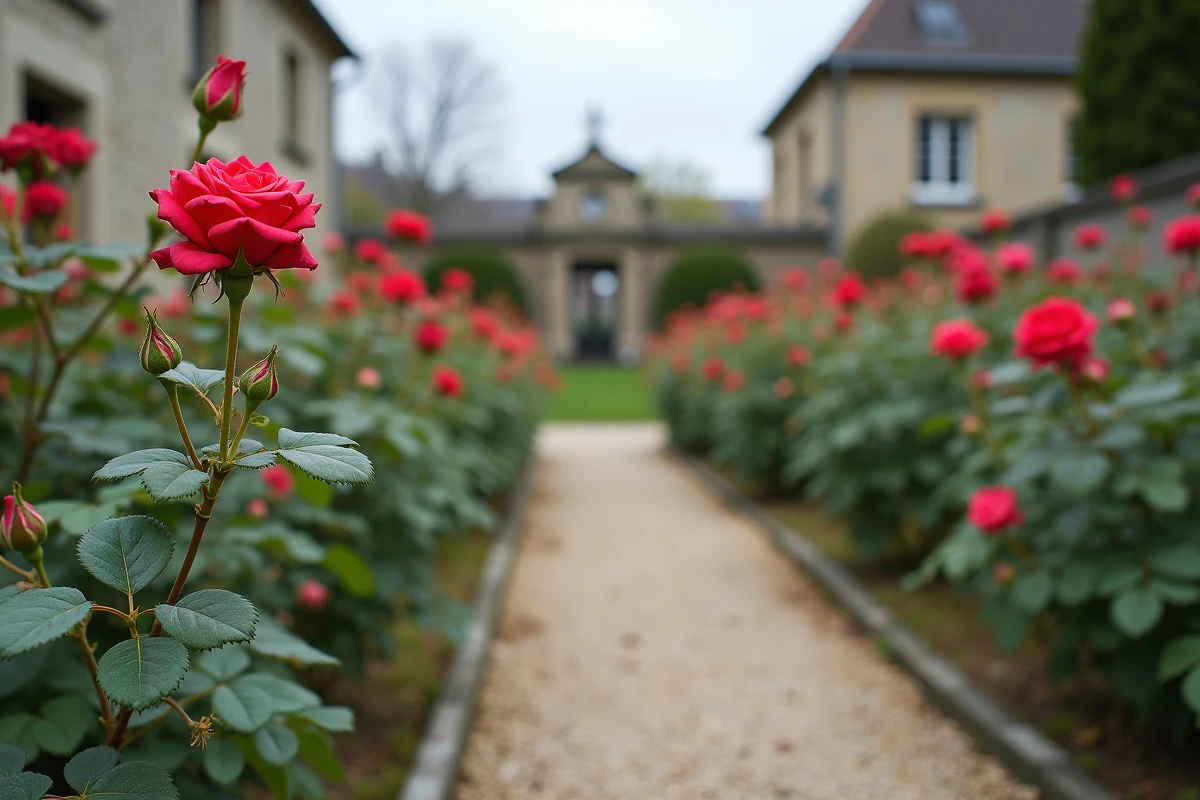
Orientation of the eye and architecture of the rose bush: cutting towards the outside is not enough
The classic advice to cut above an eye turned outward aims to open the center of the rose bush and promote air circulation. This principle remains valid for upright bush roses. It becomes counterproductive for other architectures.
A ground cover rose or a weeping rose needs branches that extend in all directions, including towards the center. The orientation of the cut should follow the desired architecture, not a universal dogma. On a horizontally trained climber, we favor eyes turned upwards to generate vertical shoots, which are precisely the ones that bloom most abundantly.
The position of the eye on the branch also matters. An eye located very close to the ground, on thick wood, will produce a vigorous shoot but often one that flowers poorly in the first year. An eye placed higher, on wood of medium thickness (comparable to a pencil), generally produces a flowering stem more quickly.
Identifying a viable eye at the end of winter
A healthy eye appears as a small red or pink swelling, slightly shiny. Black, dried, or sunken eyes are dead. If several consecutive eyes are necrotic, lower the cut until a viable bud is found, even if this shortens the branch more than expected.
- A swollen and light green eye at budding indicates normal sap flow.
- An eye that remains closed while neighboring eyes are budding signals internal damage, often due to frost or an underlying canker.
- Eyes located just below a poorly healed cut (split wood, flush cut) frequently die from desiccation.
The choice of the eye at the time of pruning is not a cosmetic detail. Each cut directs growth for the entire upcoming season. A rose bush poorly directed by rough pruning accumulates unproductive wood in the center, promotes fungal diseases due to lack of aeration, and concentrates its flowering on a few peripheral branches instead of distributing it across the entire framework.