A gray box set against the exterior wall, exposed pipes, a spinning fan: an outdoor air conditioning unit is hardly a decorative feature. Yet concealing it carelessly can cause the unit to overheat, increase energy consumption and make the noise more noticeable to neighbors. The challenge is to find a screen that meets the air conditioner’s technical requirements while blending into the garden.
Airflow and clearance: technical requirements come before appearance
Before choosing a cover or planting anything, it’s important to understand how the outdoor unit works. It draws in ambient air, extracts heat, then releases a stream of hot air (or cold air in heating mode). If this expelled air flows back into the intake, the compressor has to work harder.
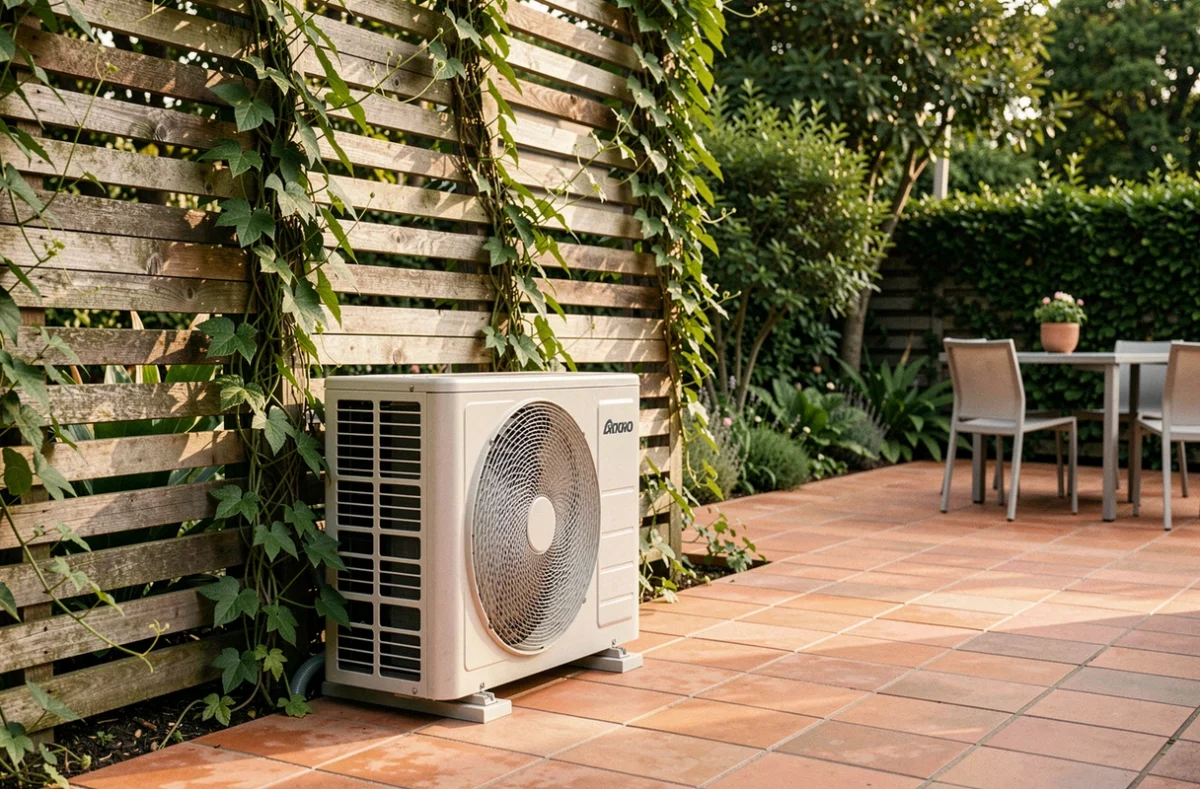
The result: a cover that’s too enclosed increases noise, energy consumption and wear. The solid, airtight wooden enclosure often seen on social media is the worst choice from a technical standpoint. A slatted screen, installed with the clearances specified by the manufacturer, allows air to circulate without causing recirculation.
Have you noticed that some air conditioners seem noisier in the height of summer? The disturbance isn’t always caused by the unit’s own noise level. Vibrations transmitted to the wall or slab, repeated restarts during heatwaves, and sometimes a poorly designed cover that acts as a sound box are often to blame. Anti-vibration mounts beneath the outdoor unit reduce this transmission before you even consider an acoustic screen.
So, the idea of integrating air conditioning into the garden design starts with one rule: any screen must remain open on at least three sides, with enough clearance between the cover and the unit.
Plant screens around an air conditioner: which plants and how far away?
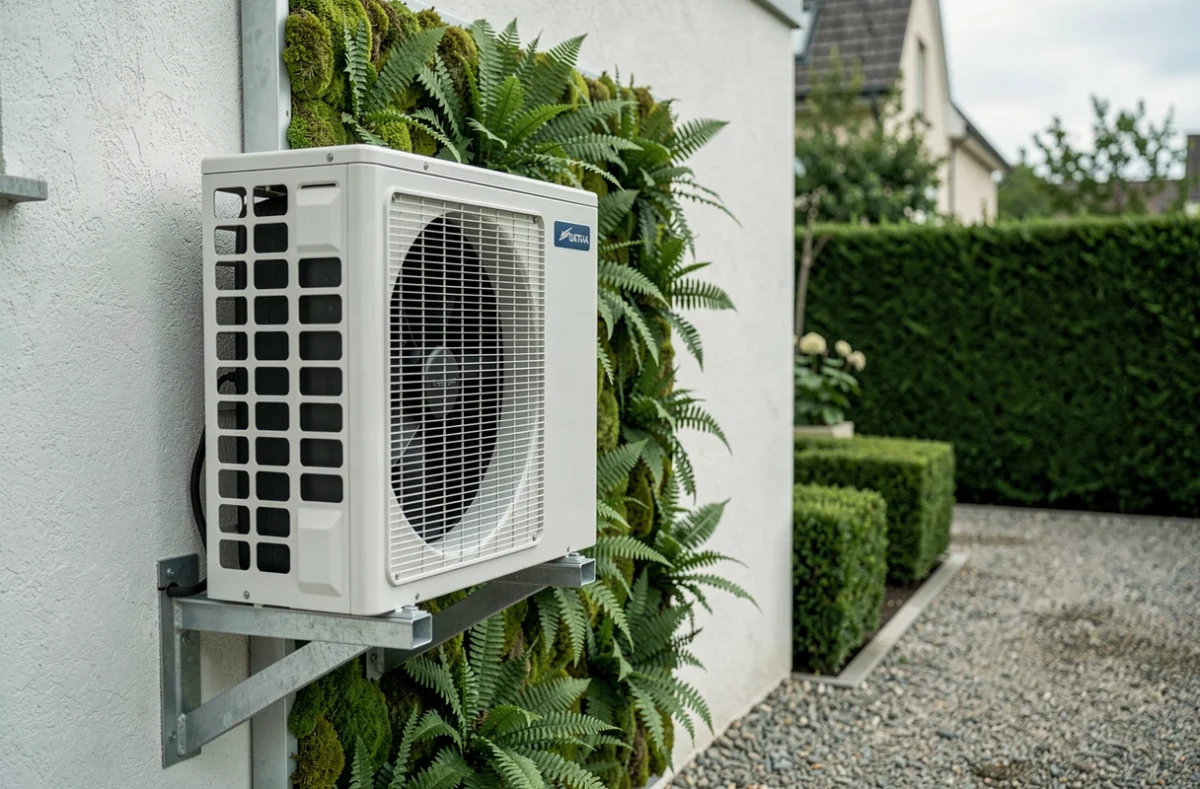
Planting a hedge or setting up planters to conceal the outdoor unit is the most natural solution. It also offers a real acoustic benefit: the mass of foliage makes the noise less noticeable, although the reduction in decibels is modest.
Choose suitable plants
Not all plants are suitable. Evergreen foliage provides year-round screening, but avoid species whose fallen leaves or flowers could clog the fan grille.
- Ornamental grasses (miscanthus, pennisetum) create a soft screen, don’t shed large quantities of leaves and tolerate the hot air expelled by the unit.
- Non-running bamboo (fargesia) grows quickly, stays dense in winter and needs only annual pruning, provided you leave at least 50 cm between the canes and the outdoor unit.
- Star jasmine or honeysuckle grown on an open trellis combine visual screening, fragrance and good airflow.
Clearance is non-negotiable
Leave at least 40 to 50 cm of clear space between the foliage and the unit to ensure the plants don’t obstruct either the air intake or the outlet. Keep one side clear for easy filter maintenance and technician access during the annual service.
Decorative wood or aluminum air conditioner covers: what to look for in a garden
A ready-made cover in wooden slats, composite or powder-coated aluminum gives a neater finish than a plant screen. It’s a good fit for contemporary patios or small city gardens where there’s little room for planting.
Why choose one instead of a custom-built enclosure? Covers designed for air conditioners already have angled slats that direct the airflow. An upturned garden cabinet or a recycled pallet guarantees neither proper ventilation nor durability.
Choose a removable or hinged cover to make life easier: a technician must be able to access the outdoor unit without dismantling the structure. A cover screwed to the wall makes every service call more complicated and often ends up damaged.
As for materials, Class 4 timber (pressure-treated pine, red cedar) resists moisture without needing annual treatment. Aluminum won’t warp from the hot airflow and requires no maintenance, but it costs more. Composite mimics wood without the upkeep, provided you check that it won’t warp when exposed to the direct heat from the outlet.
Planning rules and neighbors: check before installing an air conditioner cover
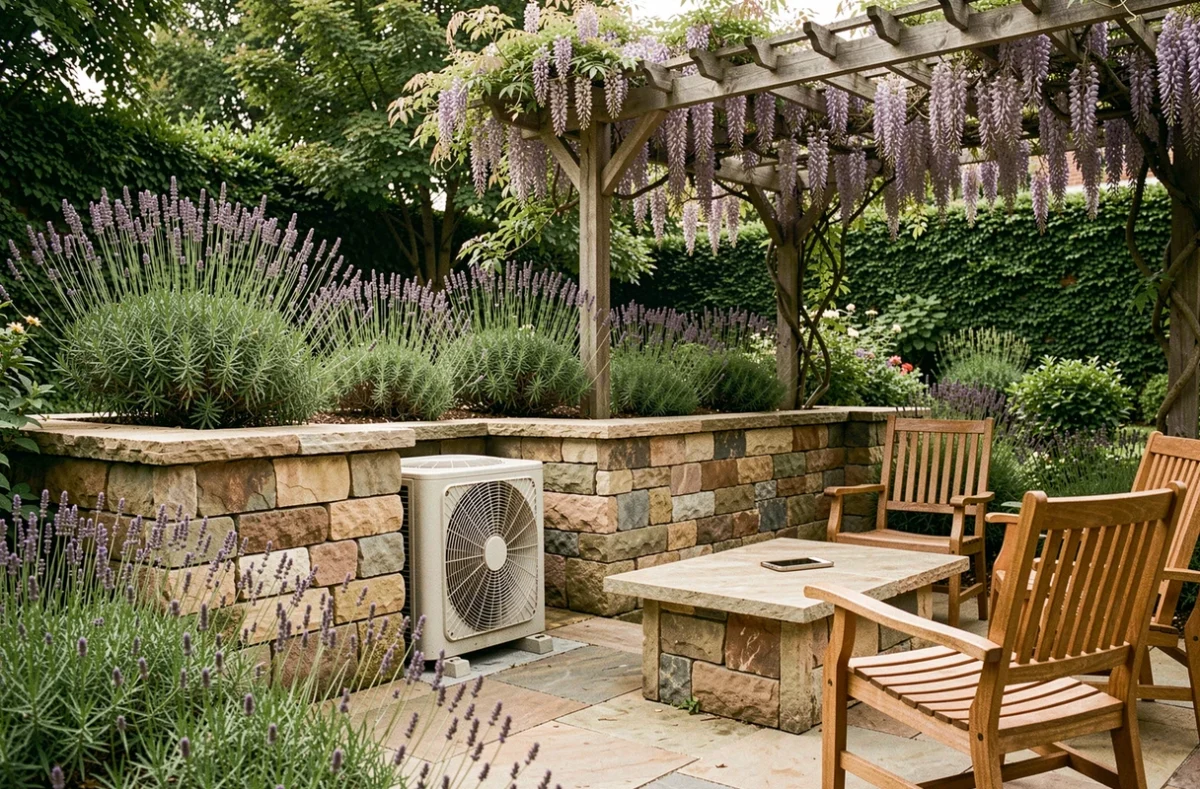
In France, an outdoor unit visible from the street or one that changes the appearance of the facade may require a prior works declaration. Local urban planning rules (PLU) and regulations for protected areas (such as the surroundings of a historic monument) may also impose restrictions on colors or materials.
Have the project approved by the town hall’s planning department before ordering a cover or planting a hedge to avoid receiving a formal notice afterward.
As for noise, French regulations on neighborhood noise don’t set a specific numerical limit for domestic air conditioners. The duration, frequency and intensity of the noise are what may be held against a homeowner. A well-designed screen reduces the noise perceived by neighbors, but it can’t make up for poor installation on anti-vibration mounts or a faulty compressor.
- Check the PLU and any subdivision easements before making changes.
- Check the co-ownership rules if the garden is part of a horizontal condominium.
- Let the adjoining neighbor know if the unit is close to the property line, even if there’s no legal requirement to do so.
A successful air conditioner cover combines three qualities: it allows air to circulate, is easy to open for maintenance and suits the style of the garden. Even the most beautiful cover in the world can’t fix a poorly installed unit. Start by checking clearances, vibrations and local regulations, then choose freely between plants, wood or aluminum—with no unpleasant surprises.