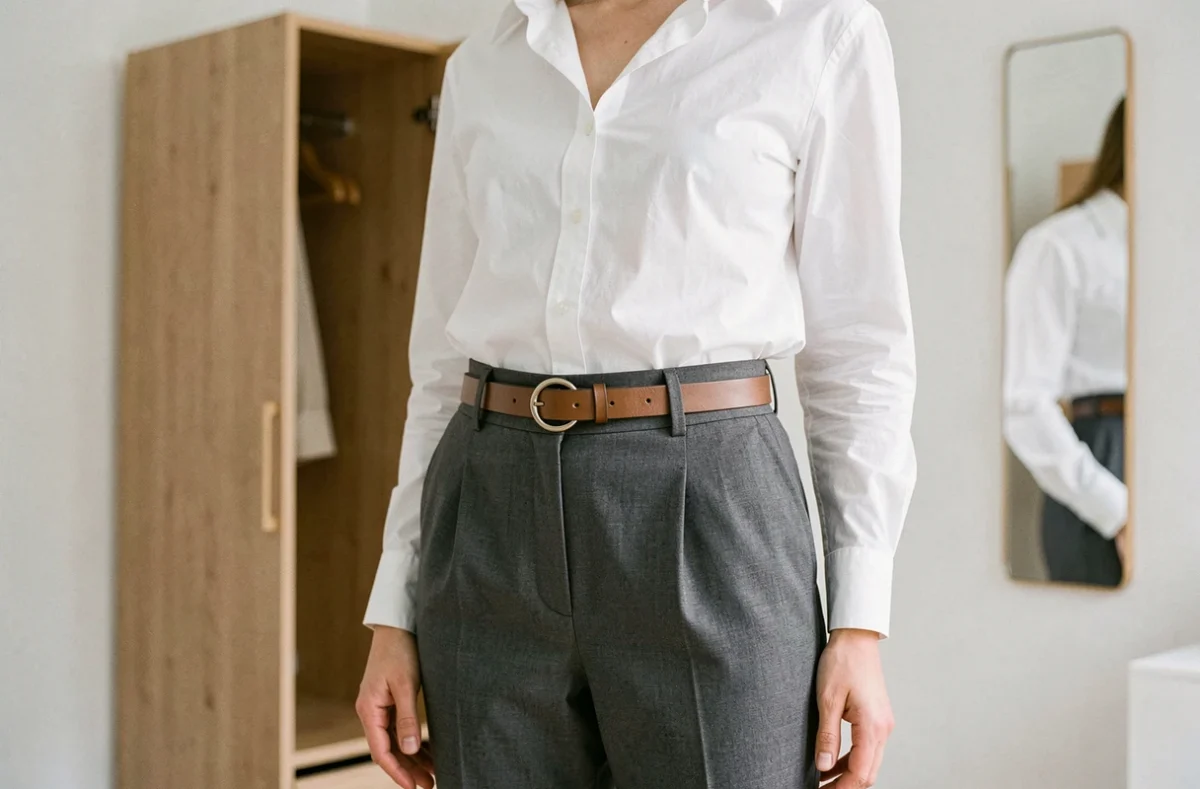
A brand-new pair of dress trousers, no belt loops in sight, and the belt starts slipping as soon as you move. Before looking for a way to keep them up, it’s worth checking something most guides overlook: are the trousers actually too loose at the waist, or is the problem with the fit elsewhere? The answer completely changes how to wear a belt with trousers that have no belt loops.
Trousers without belt loops: tell a waist-size problem from a fit problem
You put on a pair of trousers, they gape at the waist, and your first instinct is to tighten them. With trousers that have no belt loops, that usually means reaching for something to hold them up (a belt, clip or elastic). The problem is that tightening the waist won’t fix a fit that pulls across the hips or crotch.
A simple test will help you tell the difference. While standing, pinch the excess fabric at the waist on both sides. If the trousers sit well on your hips and thighs once you’ve pinched the excess, the waist is genuinely too wide: a belt or tightening device should solve the problem.
If, on the other hand, the trousers pull at the crotch, crease around the pockets or ride up when you sit down, the issue is with the overall fit. You can learn how to wear a belt with trousers that have no belt loops, but no accessory can make up for a poor fit across the hips. In that case, it’s best to have them altered by a tailor.
Some dress trousers are deliberately designed without belt loops. Tailored styles with integrated side adjusters let you adjust the waist directly, without a belt. These adjusters only address excess room at the waist; they won’t fix a fit problem lower down.
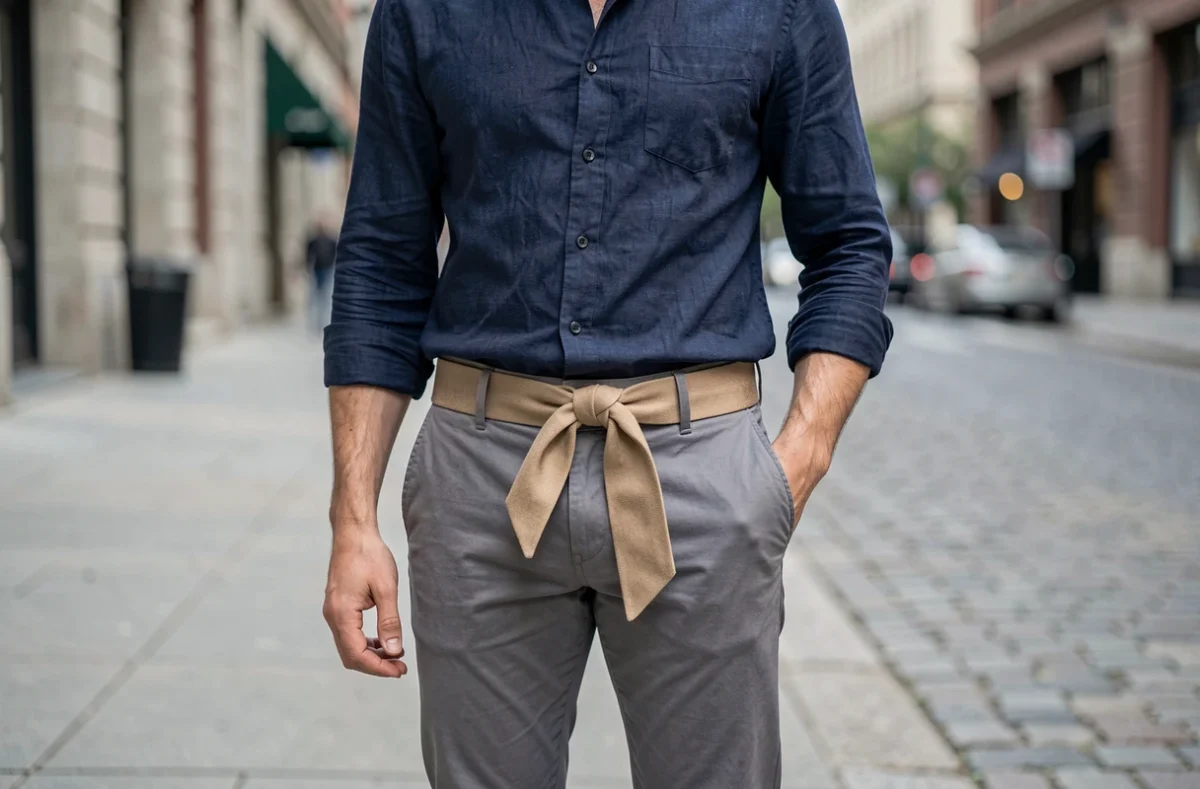
Ways to keep a belt in place on trousers without belt loops
Once you’ve confirmed that the trousers simply need to be held up at the waist, there are several options, depending on the occasion (the office, a casual outfit or a quick fix).
Wear a regular belt directly over the fabric
You can wear a standard belt with trousers that have no belt loops, as long as you choose a slim style (less than 3 cm wide). A wide belt is more likely to slip when there are no loops to hold it in place. The trick is to fasten it one notch tighter than usual, while checking that the fabric doesn’t bunch unattractively above the buckle.
The weight of the buckle directly affects how well the belt stays in place. A heavy metal buckle pulls the front of the belt down. Choose a flat, lightweight buckle with a simple prong.
Removable waist-tightening clips
Decorative or tightening clips attach directly to the waistband of the trousers (the fabric band at the top, not the leather belt). They pinch the excess fabric to adjust the waist. A few things to keep in mind:
- Try the clip on the sides or at the back before securing it in place, as positioning it incorrectly can create a visible bump under a sweater or jacket
- Don’t force the mechanism onto thin or delicate fabric (silk, fluid viscose): the clip may leave a permanent mark
- Choose styles with a silicone or rubber lining on the inside, which grips the fabric without slipping
A clip is more of a quick fix than an everyday solution. It works well on thick wool trousers or corduroy. On lightweight chinos, the result depends on the fabric’s thickness.
Buckle-free elastic belt
Watch out for a common pitfall: many so-called “invisible” elastic belts attach directly to the trousers’ belt loops. These styles won’t work with trousers that don’t have belt loops. Before buying, check that the fastening system works independently (magnetic clip, flat buckle or hook-and-loop fastening).
Styles with an independent fastening are worn like a regular belt. Their advantage is their stretch, which follows the shape of the waist without creating a bulge. Their limitation: they provide less support than a rigid belt if the trousers are significantly too loose.

Braces as an alternative to a belt with trousers without belt loops
Braces bypass the problem entirely by holding the trousers up from the shoulders. With dress trousers that have no belt loops, they’re often the option that best suits the garment’s style.
One technical detail makes all the difference: button-on braces require buttons sewn inside the waistband of the trousers. If the trousers don’t have them, you’ll need to have them added (a quick job for an alterations specialist, taking just a few minutes per button). Clip-on braces don’t require any alterations, but they may not grip smooth fabric securely enough.
- Button-on braces: reliable support, but require compatible buttons sewn into the trousers
- Clip-on braces: ready to wear, with support that varies depending on the fabric
- Wide braces (3.5 cm or more): distribute weight more evenly and are more comfortable to wear all day
Brace clips and belt buttons aren’t automatically interchangeable. Check that they’re compatible before buying.
Alterations and side adjusters: adjust the trousers, not the accessory
If you regularly wear trousers without belt loops, alterations are the neatest solution. A tailor can add discreet belt loops (in matching fabric, making them almost invisible) or install side adjusters if the trousers don’t already have them.
Adding belt loops usually takes very little time and lets you wear any belt without a workaround. It’s a modest investment that makes the trousers more comfortable for the long term.
It’s better to tailor the trousers to your body than to keep adding accessories to compensate. If the trousers slip despite a belt, clips and maximum tightening, they’re probably the wrong size or cut. A targeted alteration at the hips or waist costs less than a collection of gadgets that end up at the back of a drawer.