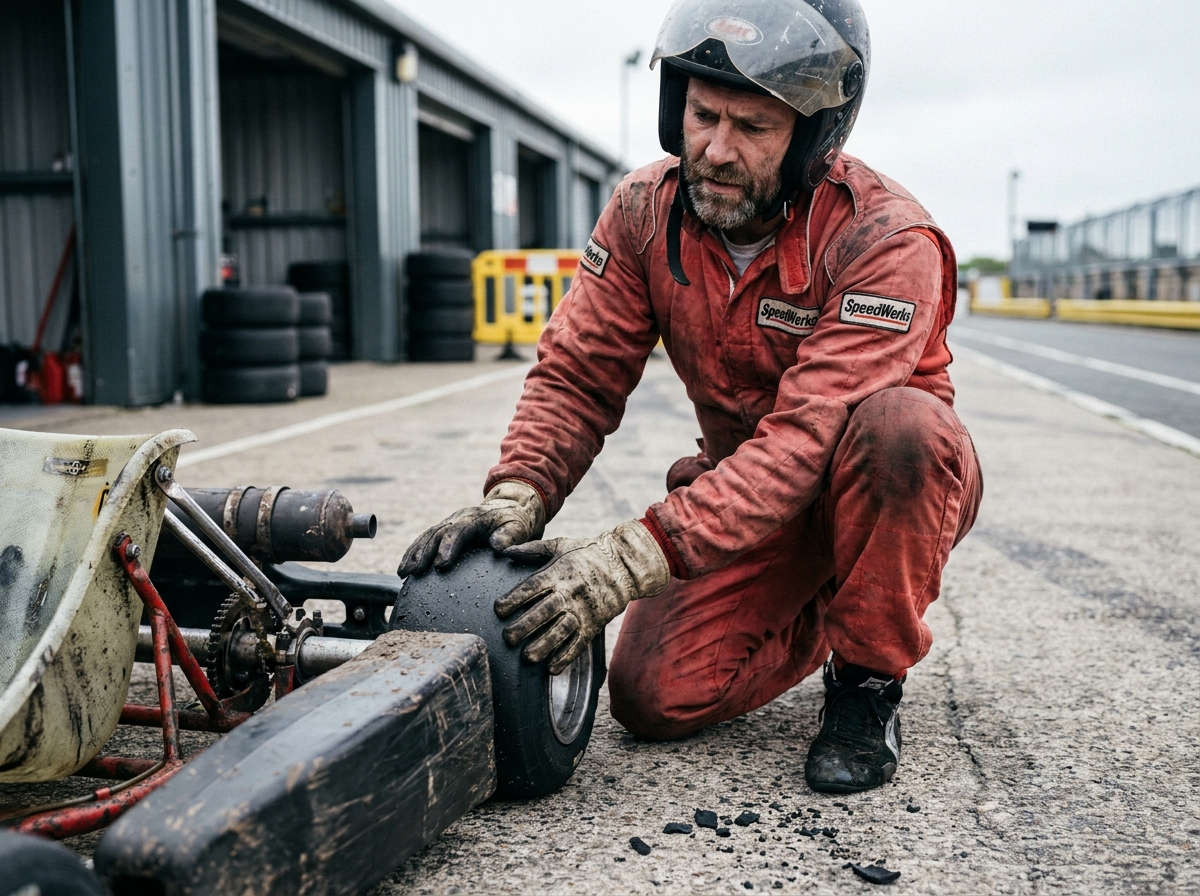
A chassis stored all winter in a damp garage does not behave like one that has been properly stored. Updating your karting equipment before each season means first accepting that several months of inactivity degrade components that you thought were reliable. Hardened tires, hygroscopic brake fluid, a suit with fatigued seams: karting imposes an annual verification cycle that goes beyond a simple mechanical checklist.
Transition from ECE 22-05 to ECE 22-06: what it changes for your karting helmet
The European regulation on helmets has shifted. Since January 2024, helmets approved ECE 22-05 can no longer be stocked as new by retailers. Their sale will be completely prohibited starting January 2027. Buying an ECE 22-05 helmet on clearance means acquiring equipment with a limited regulatory lifespan.
For someone planning to race for several seasons, choosing an ECE 22-06 approved karting helmet is not a luxury; it’s a matter of sustainability. The 22-06 standard includes impact tests at more varied angles and better consideration of rotational shocks. The “bargains” on end-of-line 22-05 helmets are tempting, but they pose a concrete problem: some circuits and competition organizers are already beginning to require the most recent standard.
Before the season, check the label inside your helmet. If it indicates ECE 22-05 and you plan to race beyond 2026, consider replacing it now rather than in an emergency.
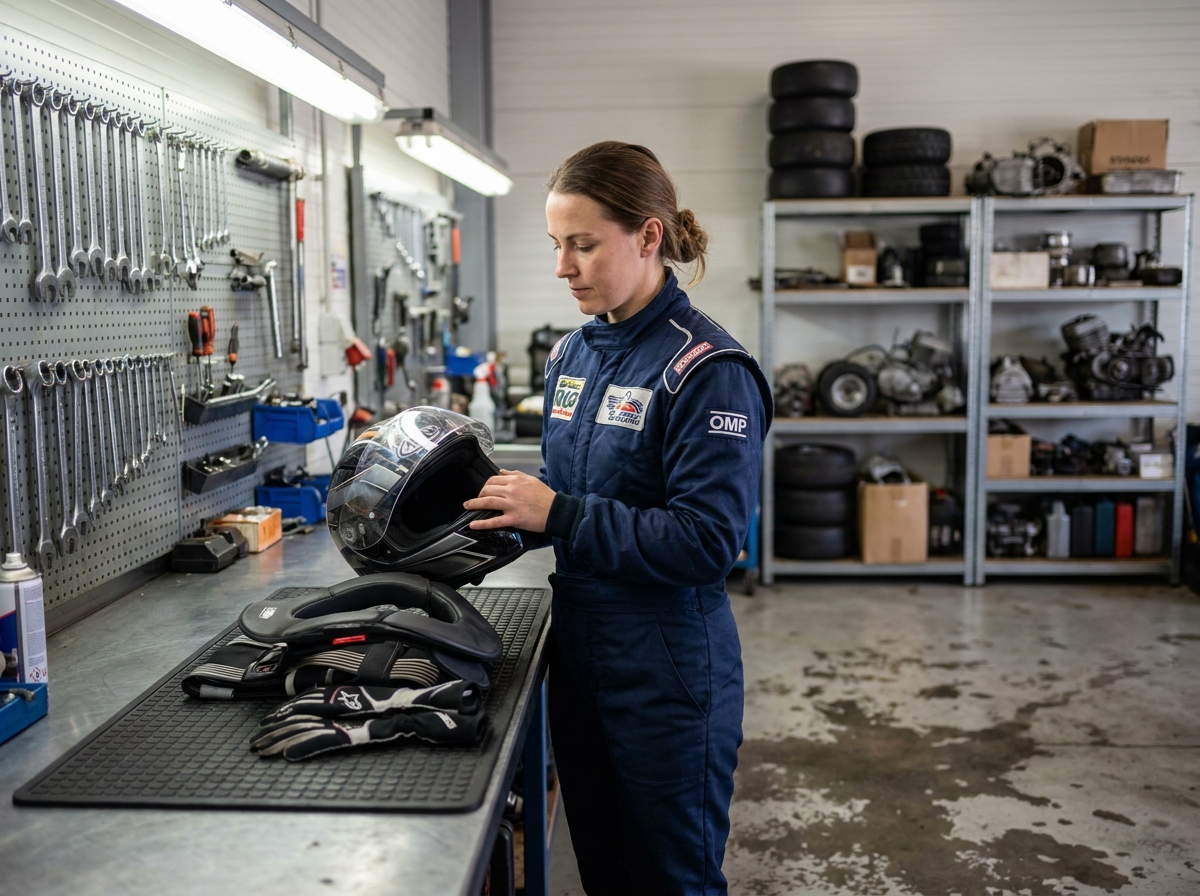
Karting protective clothing: the FIA 8877-2022 standard and actual validity duration
Karting suits, gloves, and shoes are not eternal, even when they appear to be in good condition. The FIA published a clarification in 2023 regarding the FIA 8877-2022 standard for protective clothing for kart drivers, specifying design and performance requirements.
The point that many amateur drivers overlook: FFSA approvals on textile equipment have a validity period. A suit approved several years ago may no longer meet current requirements, even if the fabric seems intact. Seams lose strength, protective foams compress, and zippers oxidize.
- Inspect the main seams (shoulders, crotch, back) by pulling moderately: any seam that gapes or has fraying thread compromises abrasion resistance
- Check the approval date on the inner label and compare it to the requirements of your circuit or league’s sporting regulations
- Check the condition of the rib protectors and cervical collar: internal foams that do not regain their shape after compression no longer absorb shocks properly
Equipment that has passed its approval date offers less protection, regardless of its external appearance. Protective textiles are not immune to aging.
Brakes and transmission after winter: invisible degradation
Mechanical guides detail chain tension and pad wear. What they address less is the chemical degradation that occurs during months of storage.
Brake fluid is hygroscopic: it absorbs ambient moisture through hoses and seals. After several months without running, the boiling point of the brake fluid significantly decreases. A complete bleed at the start of the season is not optional. Driving with degraded fluid risks losing the pedal during intense braking, exactly the scenario no one wants to experience.
The chain, on the other hand, undergoes another phenomenon: superficial corrosion between the links, even in a covered garage. Simple lubrication is not always enough. Inspect each link by bending the chain sideways. If some links resist or squeak, the chain is compromised. The drive sprockets deserve the same examination: hooked or asymmetrical teeth indicate wear that accelerates the deterioration of the new chain you just installed.
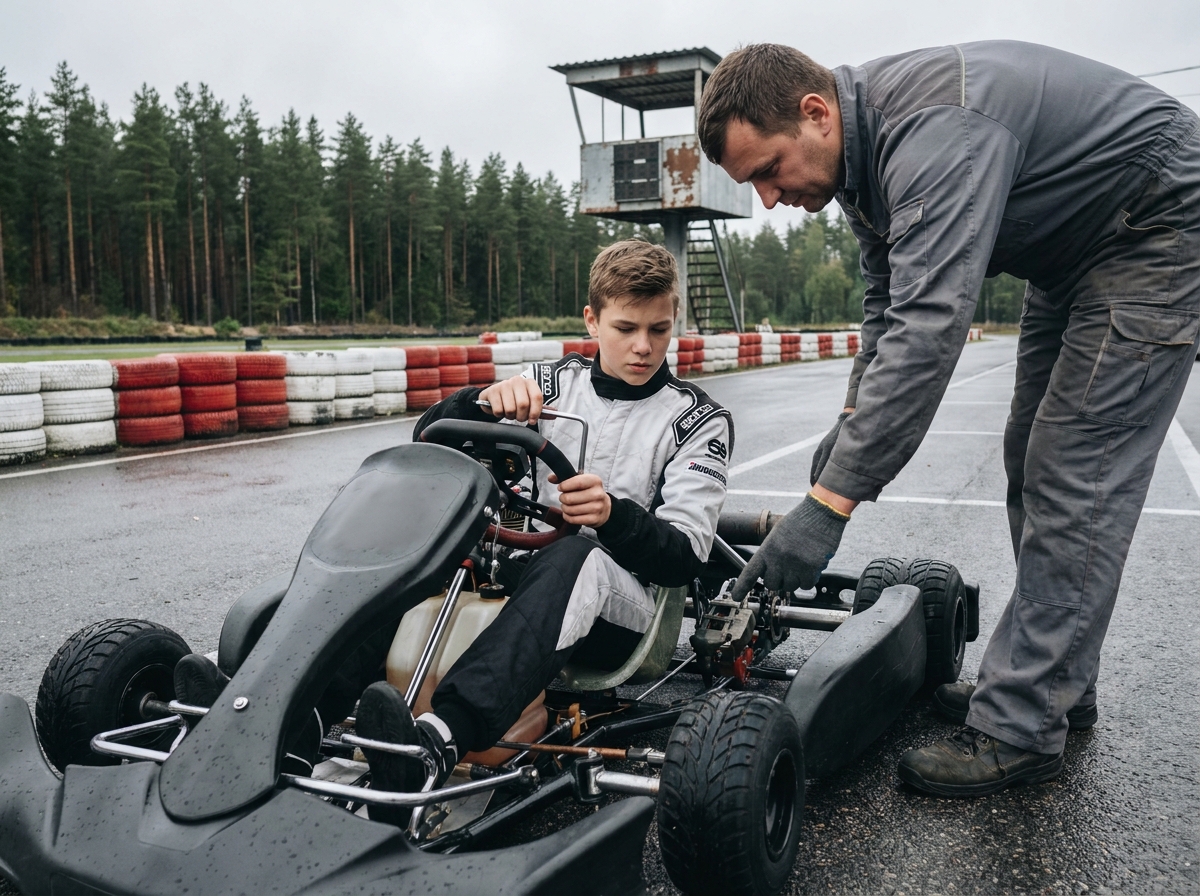
Chassis and bearings: detecting structural fatigue before it manifests on the track
A kart chassis works a lot. Without suspension, it is the tubular frame itself that absorbs the stresses. After a full season followed by prolonged storage, micro-cracks can appear at the weld points, particularly around the engine mounts and seat mounting brackets.
Run your fingers over each weld looking for roughness or cracks that the eye alone may not always detect. The straight tubes also deserve a visual inspection: a slightly bent tube alters the geometry of the kart and makes handling unpredictable in corners.
Wheel bearings are another critical area. Spin each wheel by hand with the kart elevated. A healthy bearing spins freely and quietly. Any grinding noise, any momentary resistance, or any axial play indicates a bearing that needs to be replaced before the first outing.
- Welds on engine mounts: look for cracks and rust spots that weaken the tube
- Seat mounting brackets: check that the screws do not turn in empty space (stripped threads in aluminum)
- Steering column bearings: a hard spot when turning the wheel at a standstill reveals a seized bearing
- Floor and bumper: deformations alter the flex of the chassis and distort settings
Kart tires after storage: hardness matters more than tread
A kart tire stored for several months hardens. The rubber loses elasticity, which significantly reduces grip, especially on the first laps when the track temperature is still low. The visual aspect (groove depth, absence of cuts) says nothing about the actual hardness of the compound.
A portable durometer allows you to measure the Shore hardness of your tires and compare it to the manufacturer’s specifications. Without this tool, press your nail firmly into the tread: if the rubber does not regain its shape within a few seconds, it has lost its mechanical properties. Driving on hardened tires gives a false impression of lack of grip that leads to over-correcting chassis settings, creating a vicious cycle of poor behavior on track.
Replacing a set of tires costs less than a track exit caused by unpredictable lack of grip. It’s one of the few areas where the investment at the start of the season is justified without hesitation, especially if the tires have spent more than a year in storage.