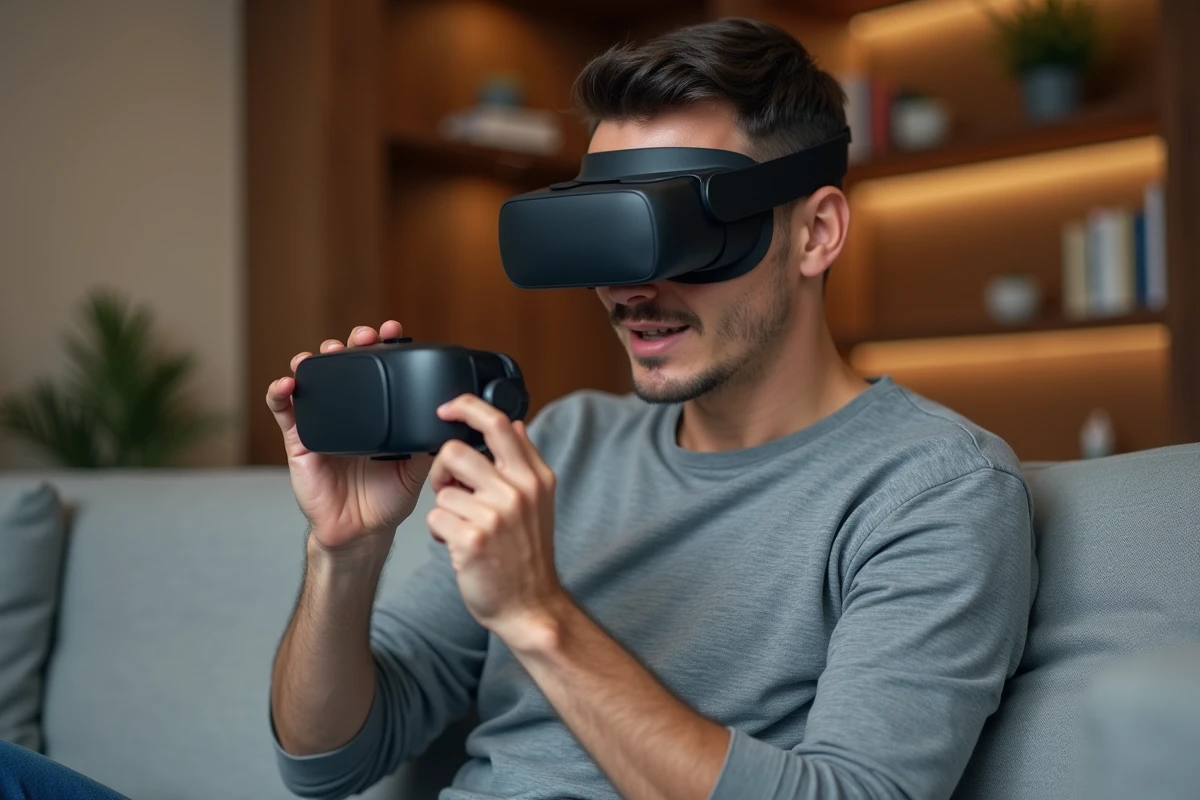
The next XR headset from Pico has been making headlines for several months, but one detail escapes most of the articles circulating: the brand has never confirmed the name “Pico 5”. In its press release shared by KultureGeek on February 10, 2026, Pico mentions a “new high-end XR headset planned for 2026,” without using that name. This deliberate ambiguity about the commercial name conceals a much deeper overhaul than just a simple version number change.
In-house chip and computer vision: what the new ByteDance division changes
Before discussing the screen or resolution, it is essential to understand what is happening behind the scenes at ByteDance. In 2025, Pico’s parent company integrated the XR team into a new division called “Emerging Devices”. This reorganization places artificial intelligence and computer vision at the center of the project, well ahead of display considerations.
In practical terms, this means that passthrough and hand tracking rely on embedded AI, not just enhanced sensors. The headset would use a chip designed in-house by ByteDance, tailored to process the video streams from external cameras in real-time. To discover the new features of the Pico 5 on Soyez Sport, this approach marks a clear break from the Pico 4 Ultra, which relied on third-party components.
Why choose a proprietary chip? Because a general-purpose chip struggles with the simultaneous tasks of passthrough, eye tracking, and graphics rendering. By designing its own processor, Pico can optimize each calculation cycle for mixed reality, where a standard chipset must make compromises.

4K Micro-OLED screens: what it changes for immersion in virtual reality
Have you ever noticed that grid effect visible when you look closely at the image in a VR headset? This is known as the “screen door effect,” and it remains the main barrier to immersion in current headsets.
The 4K Micro-OLED screens of the upcoming Pico headset aim to eliminate this problem. Unlike traditional LCD panels, Micro-OLED technology places the diodes directly on the silicon substrate. Each pixel lights up individually, producing deep blacks and significantly better contrast.
For a user, the difference is felt in two ways:
- The edges of virtual objects appear sharp, even in peripheral vision, reducing eye strain during extended sessions
- Passthrough (the view of the real world through the cameras) gains in readability, making mixed reality usable for precise tasks like reading a message or spotting an obstacle
- Dark scenes in VR games no longer turn into washed-out gray, a common flaw on the LCD panels of the previous generation headsets
This display technology is in the same family as that used by Apple in its Vision Pro. The fact that Pico adopts it for a headset that may not necessarily be at the same price level repositions the brand in the premium segment without reaching Apple’s prices.
Pico headset pricing: moving towards a clearly high-end segment
The Pico 4 attracted attention partly due to its aggressive pricing against the Meta Quest. This entry-level positioning is now a thing of the past. RedboxVR, Pico’s official reseller for the education and enterprise sector, has confirmed a price increase across the entire Pico range starting from orders on July 1, 2026.
This price increase, already confirmed for B2B, gives a clear indication of the segment targeted by the upcoming headset. ByteDance is no longer looking to sell the maximum number of units at low prices. The strategy is to invest heavily in R&D (in-house chip, Micro-OLED, embedded AI) and justify a higher price by the quality of the hardware.
Facing Meta Quest and Apple Vision Pro
The XR headset market is currently structured into three tiers. The Meta Quest occupies the consumer segment with a rich ecosystem of VR games and accessible prices. The Apple Vision Pro targets high-end productivity with a very high price tag. Pico positions itself between the two, with specs close to the Vision Pro but likely a lower price ambition.
The real question for potential buyers remains that of the software ecosystem. A high-performing headset without a convincing catalog of games or applications loses much of its appeal. ByteDance is working on a gaming ecosystem called GameTop, but concrete details on the number of titles available at launch remain unclear.
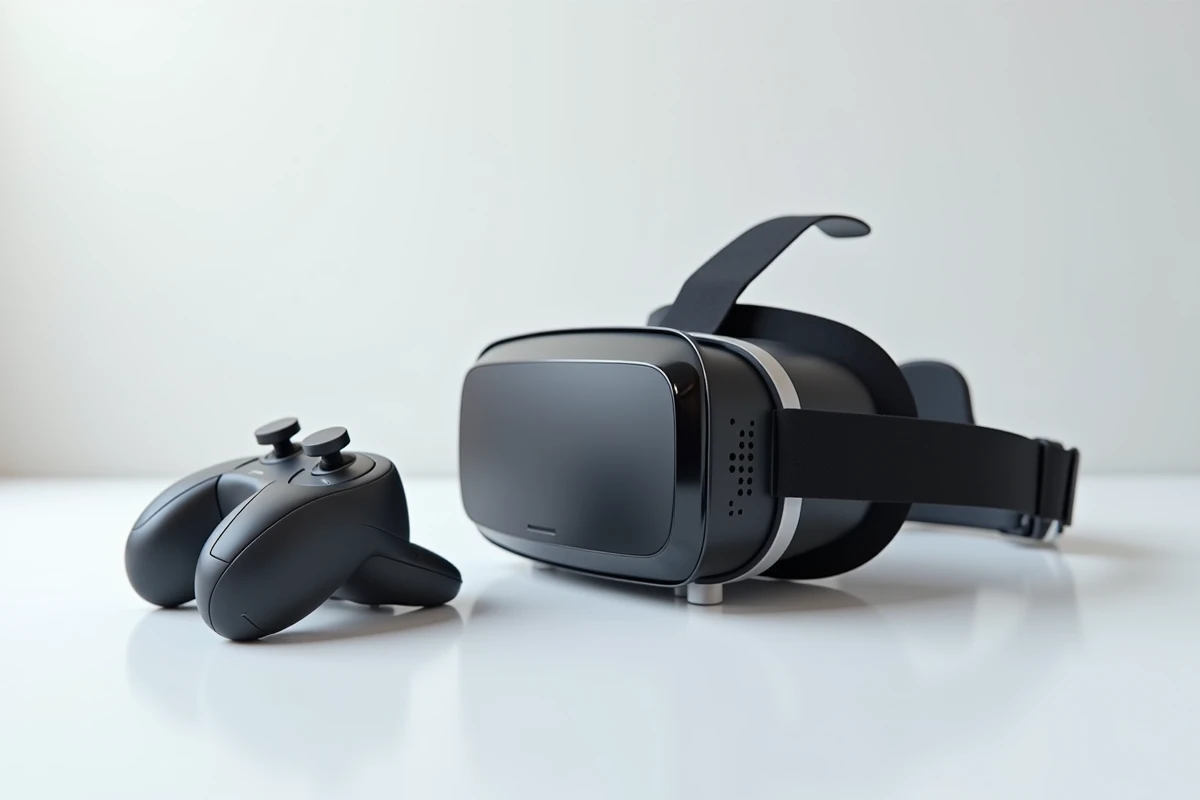
Release date of the new Pico headset in 2026: what we really know
No specific release date has been communicated by Pico. The official announcement only mentions the year 2026. Yang Zhenyuan, Vice President of Technology at ByteDance, confirmed the project during the ByteDance Scholarship Awards 2025 ceremony, without providing a more detailed timeline.
However, Pico has hinted that a presentation of the headset is planned for early March 2026, according to discussions shared on Reddit. Presentation does not mean commercialization: several months may pass between the first public demo and availability in stores.
What we can reasonably anticipate:
- A technical presentation in the first quarter of 2026, already mentioned by several sources
- A commercial launch likely in the second half of the year, allowing time to finalize production and certifications
- Availability that may vary by market, as Pico has historically prioritized Asia before Europe
The commercial name “Pico 5” is not confirmed and may be abandoned in favor of a name that better reflects the brand’s high-end repositioning. Buyers waiting for this headset to replace a Pico 4 or a Quest should keep in mind that the price will be significantly higher than that of the previous generation, and that the application ecosystem remains the determining factor when choosing.